It was a nice and sunny Spring day in the Netherlands, that Wednesday 29 April 2026, with blue skies all over. However, by late morning, clouds arose over ASK (Artillerie Schietkamp – Artillery Shooting Camp) ‘t Harde. No regular cumuli, but smoke emerging from a vastly developing wildfire. Several fire fighting units of surrounding villages were rushing to the scene to assist their military colleagues that had already started their work.
Text and photos: Emiel Sloot
Published 4 May 2026 - last updated 7 May 2026
Helicopters and Bambis
ASK ‘t Harde covers the northern part of the Veluwe, a relatively large area of forest and heath located in the central part of the Netherlands.
The fire quickly expanded. Therefore, the Defence Helicopter Command of the Royal Netherlands Air & Space Force was soon requested to assist, since they have helicopters and crew available for aerial fire fighting missions. Luckily, none were abroad for exercises or deployments.
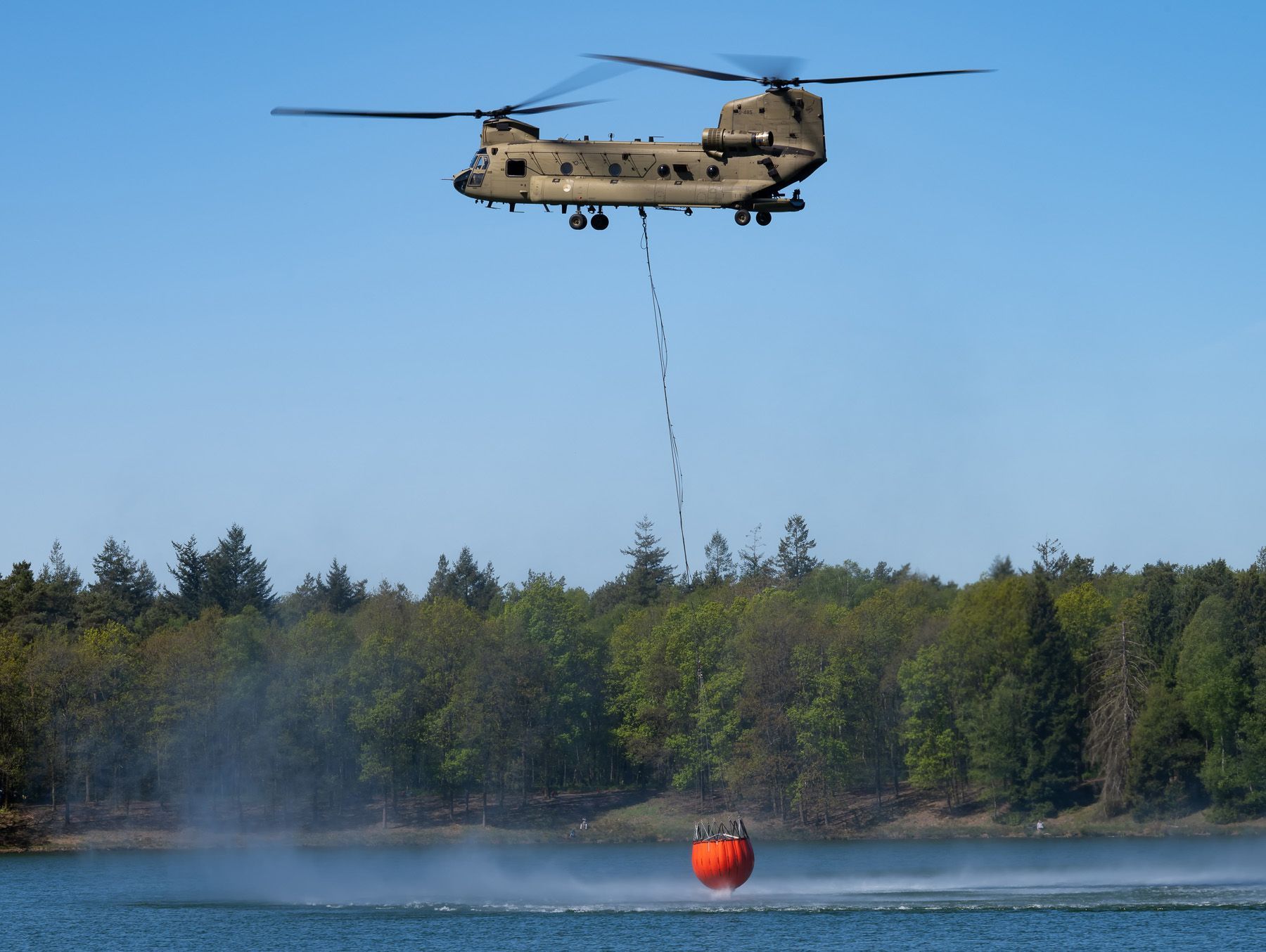
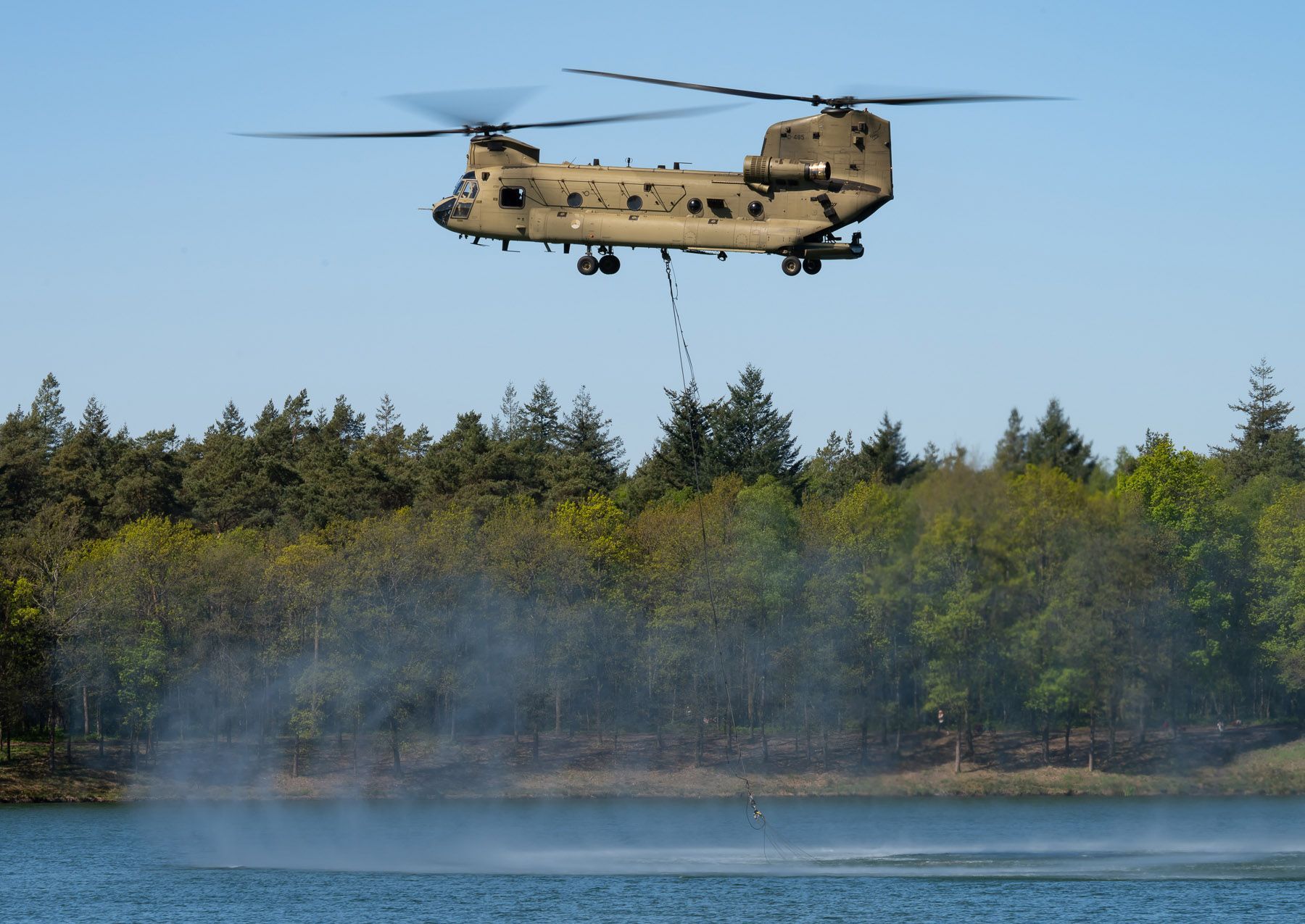
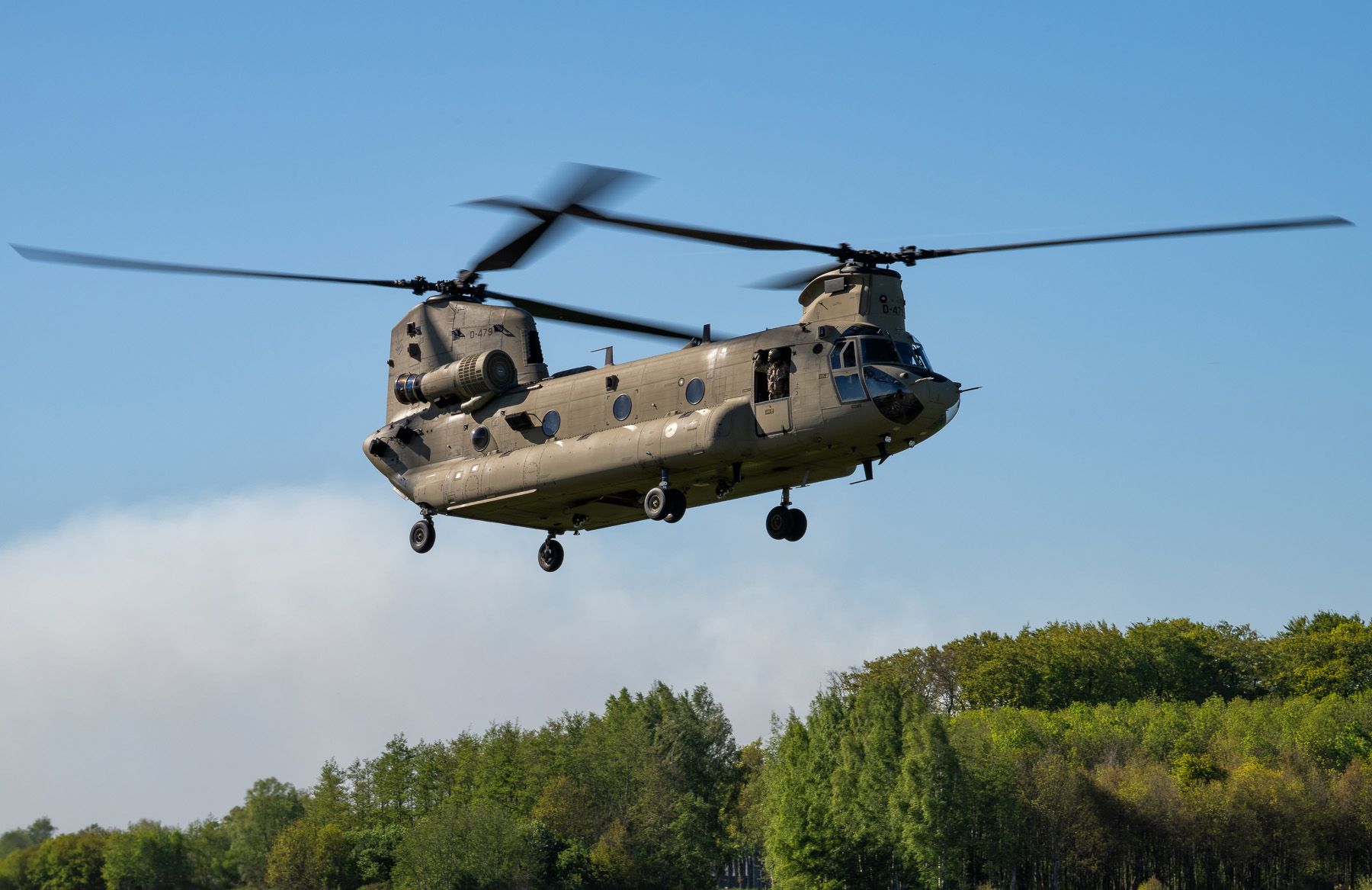
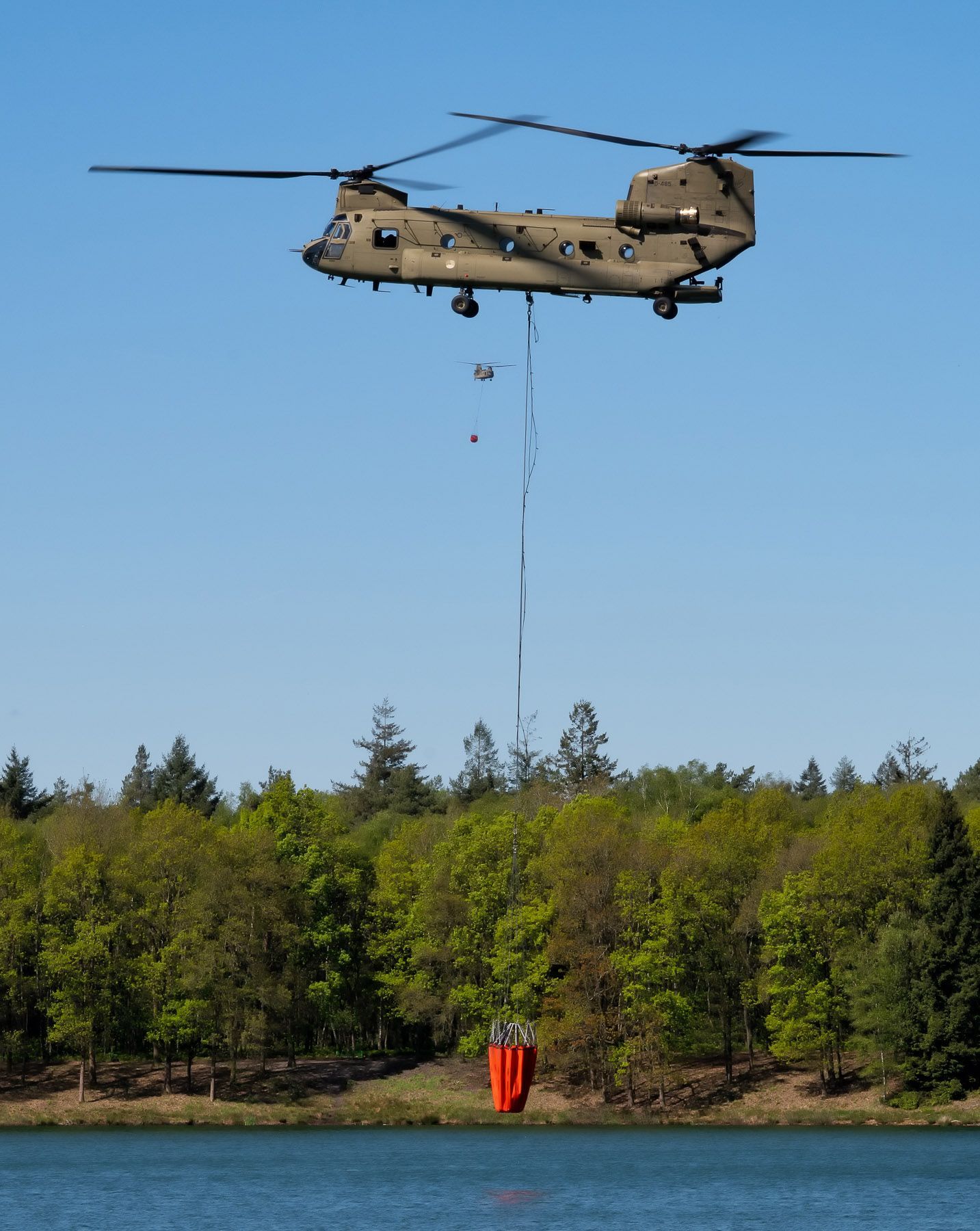
Given the weather conditions that had been present for days, the call came in not unexpectedly. Preparations to head out were swiftly done, and at 13:00h a CH-47F Chinook of 298 Squadron (call sign Grizzly80) took off from home base Gilze-Rijen, arriving at the scene some 45 minutes later. At the Veluwemeer, northwest of ‘t Harde, the crew filled their so-called Bambi-bucket with fresh water.
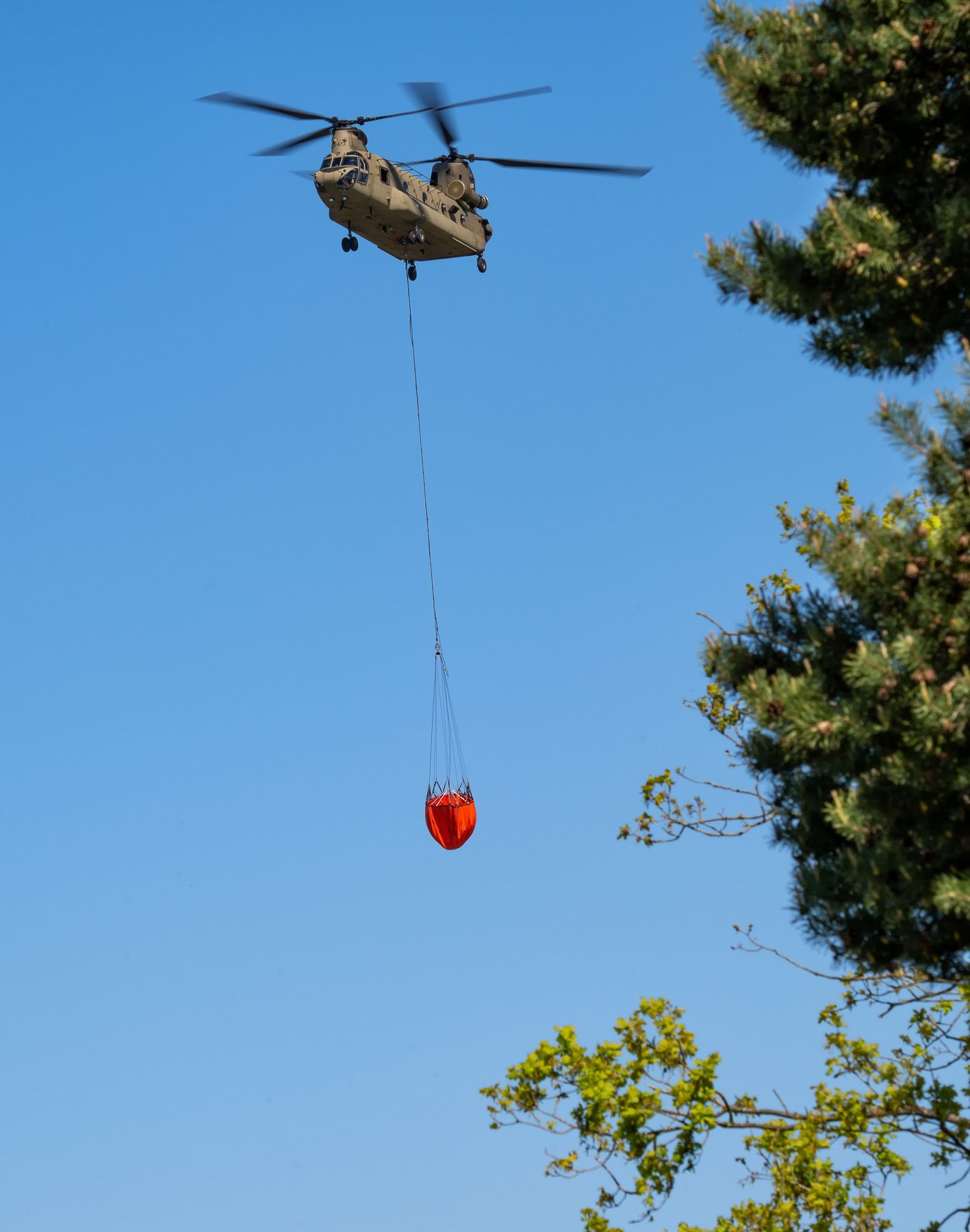
To battle the fire more efficiently, a second Chinook (Grizzly81) was dispatched and arrived around 14:45h. The bucket filling is now relocated to Heerderstrand, a nearby small recreation lake some 5 km east and conveniently upwind of the fire.
The Bambi Bucket carried by the Chinook has a capacity of 7,600 litres. This piece of equipment was invented by Canadian Don Arney in 1982, to enable water drops by helicopters to less accessible locations. The Bambi Bucket is offered in various sizes to fit many different types of rotorcraft. Operated by the crew, there are various ways to deploy, ranging from spot drops to line or arc drops to contain fires.
Beside the standard crew, a specialist of the so-called Fire Bucket Operations Team also joined the first Chinook that had arrived. This team consists of 16 civilian fire-fighting specialists that cooperate with the Defence Helicopter Command. A team member coordinates actions between ground and air fire fighters by observing from the air, to enable him/her to decide where the drops will be most effective.
Refuel on location
Meanwhile, the fire had spread quickly mainly due to the moderate easterly wind. So-called NL Alerts were issued to warn the public for the smoke and advised to keep doors and windows closed. A highway running close to ‘t Harde was closed. At a later stage, the smoke would even reach as far as England.
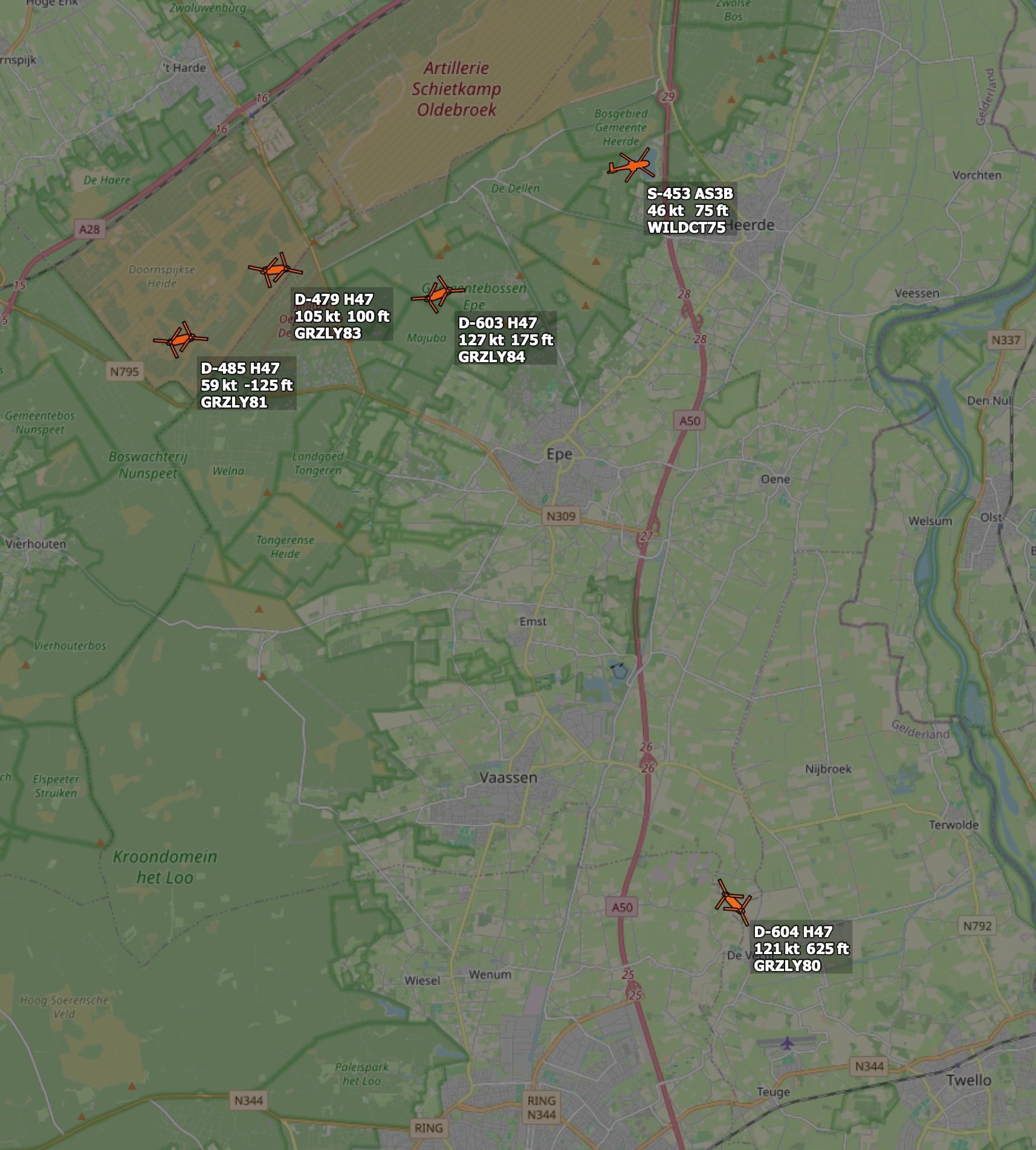
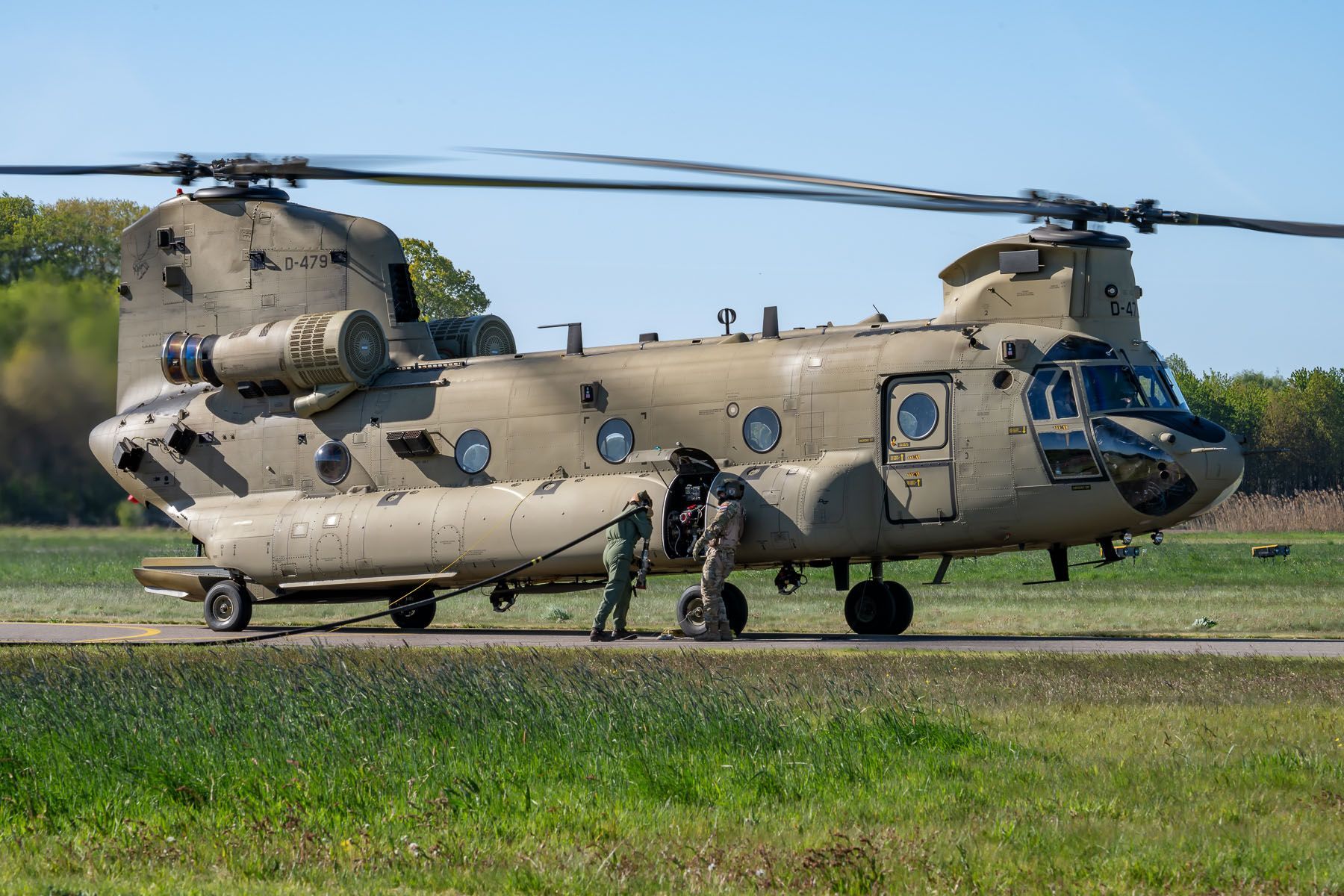
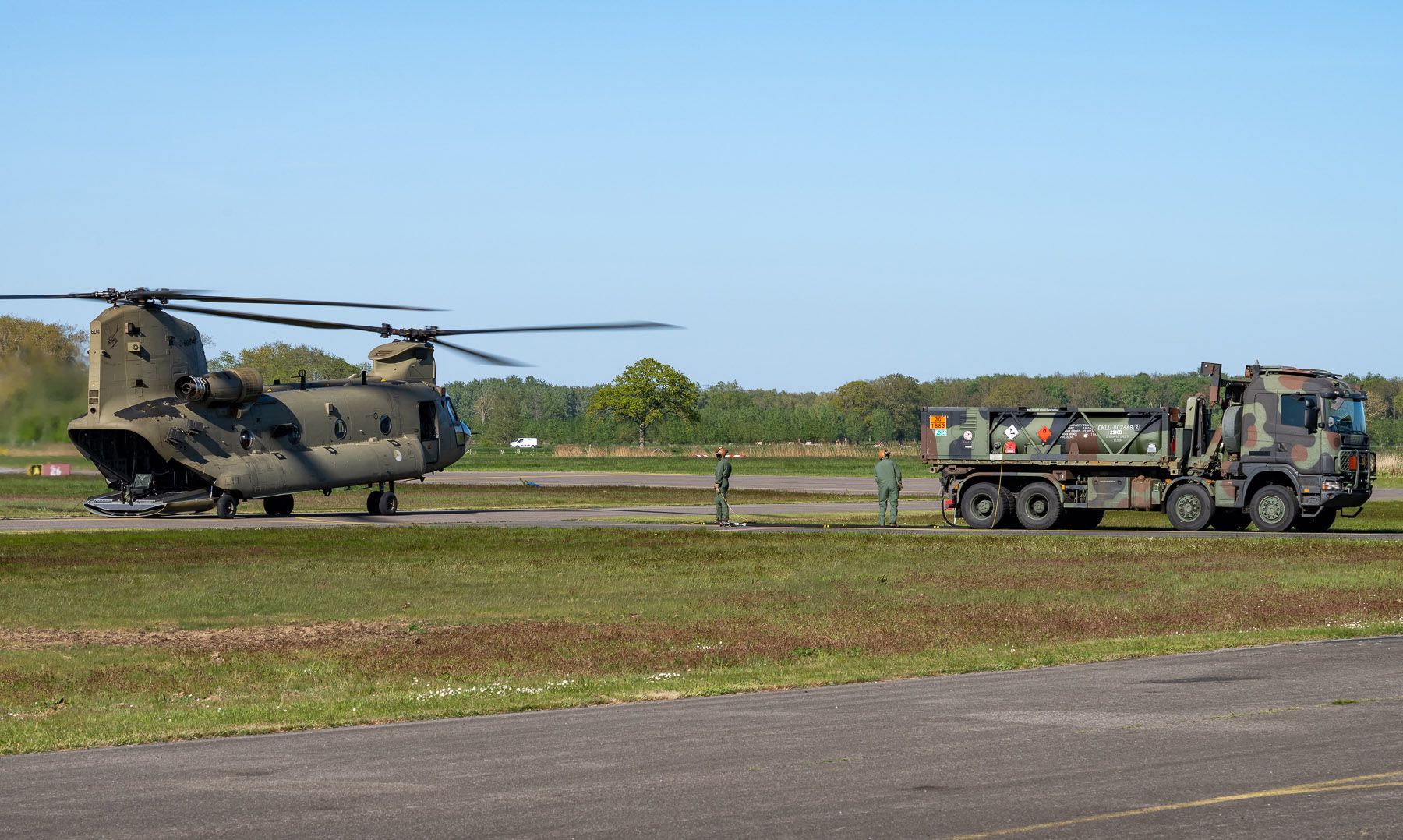
Since it became apparent that the operation would be time-consuming, the DHC quickly set up a temporary refuelling facility. This was done at Teuge, a general aviation airfield some 20 km southeast of the fire. Two fuel trucks plus a larger one to replenish these, as well as a fire truck plus coordination vehicle were quickly deployed and parked along the eastern part of the taxiway in such a way that the airfield’s normal operations could be largely continued. Local traffic was only halted when a helicopter arrived or departed. When required by their fuel status, a crew left the fire-fighting scene for Teuge to refuel ‘hot’ (engines running), that took some 15 minutes ground time.
Still, the fire raged on and additional assets were made available. Another Chinook (Grizzly83) joined the club at 16:00h, soon followed by Grizzly84 and Wildcat75; the latter being an AS532U2 Cougar belonging to 300 Special Operations Squadron. For the next few hours, these five helicopters tackled the fire, with occasional fuel stops and crew changes at Teuge. By 20:00h, the last one returned to Gilze-Rijen as these operations are conducted in daylight only. Ground-based fire fighters would continue during the night to battle the numerous smaller fires that were still present.
Changing protocols
So how could things escalate? For several days, the local circumstances had been ideal for wildfires to start. Not only the outside air temperature was relatively high, also the humidity was very low (below 20 percent) with rain mostly absent for weeks. The moderate wind was not helpful either. Apart from ‘t Harde, more wildfires broke out across the Netherlands, several involving military training exercise areas.
For that particular Wednesday, defence had announced exercises at ‘t Harde involving live firing. While it already seemed likely that this played a role in the starting of the fire, an investigation was started to confirm the source. Commander of the Armed Forces Onno Eichelsheim mentioned that exercises would not be paused because of the dry weather, since these were necessary to keep the armed forces ready for duty. However, he confirmed that procedures of running training operations in such circumstances might have to be adjusted as these protocols were established long ago, while nature and climate have changed significantly. A good intention, although of course it is always a good idea to let common sense prevail when planning to use firepower in such dry cases.
Taking measures to prevent fires like those to happen is wise. Nevertheless, experts on wildfires suggest not to get stuck into the blame game, but prefer to look beyond. Our country should get used to situations that are no longer exclusively related to the Mediterranean, like warm, dry Springs and hot Summers along with the resulting inconveniences. A change of mindset and a boost in preparations for extreme weather conditions are required to become more resilient.
On 7 May, a week after the fire, the Koninklijke Marechaussee (Dutch Military Police) concluded that the most likely scenario was that glass fibre particles and other pieces from old mines started the fire. These hot and tiny parts spread out from the pits that were used for training with explosives.
Return of the Chinooks
Back to ‘t Harde. On Thursday 30 April, the smoke had largely disappeared, but the fire was still burning. Several underground heat sources, or so-called hotspots, had developed. Although not under control yet, the situation was considered stable as the fire was no longer spreading. Not that the Chinook crews were able to have a day off. Due to the before-mentioned dry and windy weather situation, several other wildfires occurred requiring attention from above. As such, Chinooks were called into action over areas near Oirschot, Kessel and Weert, all situated in the southeastern part of the Netherlands. The latter fire even forced Kempen Airport to be evacuated.
Some persistent fires located in the southwestern corner of the ASK ‘t Harde resulted in the Chinooks being recalled to the area on Friday 1 May. Two helicopters (Grizzly80 & 81) started operations around 11:00h similar to two days earlier, scooping water at Heerderstrand while the mobile fuel location was again set up at Teuge. Here, one of the Chinooks encountered a technical issue, and subsequently a third CH-47F (Grizzly83) took over, after dropping off a technical crew at Teuge. Following repairs, Grizzly81 returned to Gilze-Rijen. The remaining Chinooks continued their operations until 18:00h before going home.
Fire under control
On Saturday 2 May 10:20h, finally the call brand meester (fire under control) is announced by the commander of ASK ‘t Harde. Some 500 ha (1,235 acre) was destroyed. Later that day, the weather changed and rain showers appeared on the horizon, relieving the situation. Still, a lot of underground heat build-up was present, requiring close monitoring for several more days. Fingers crossed for the upcoming Summer. ■