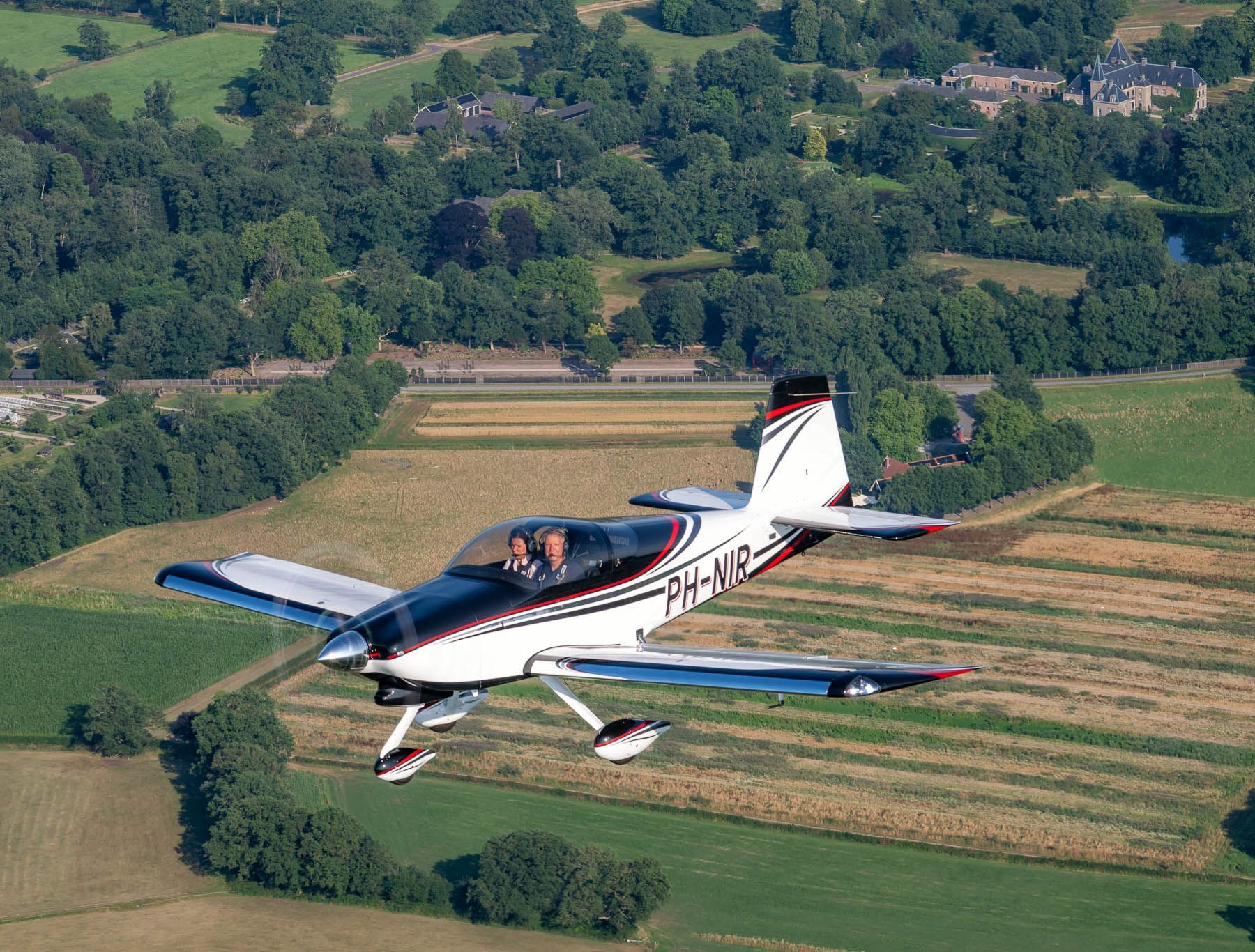
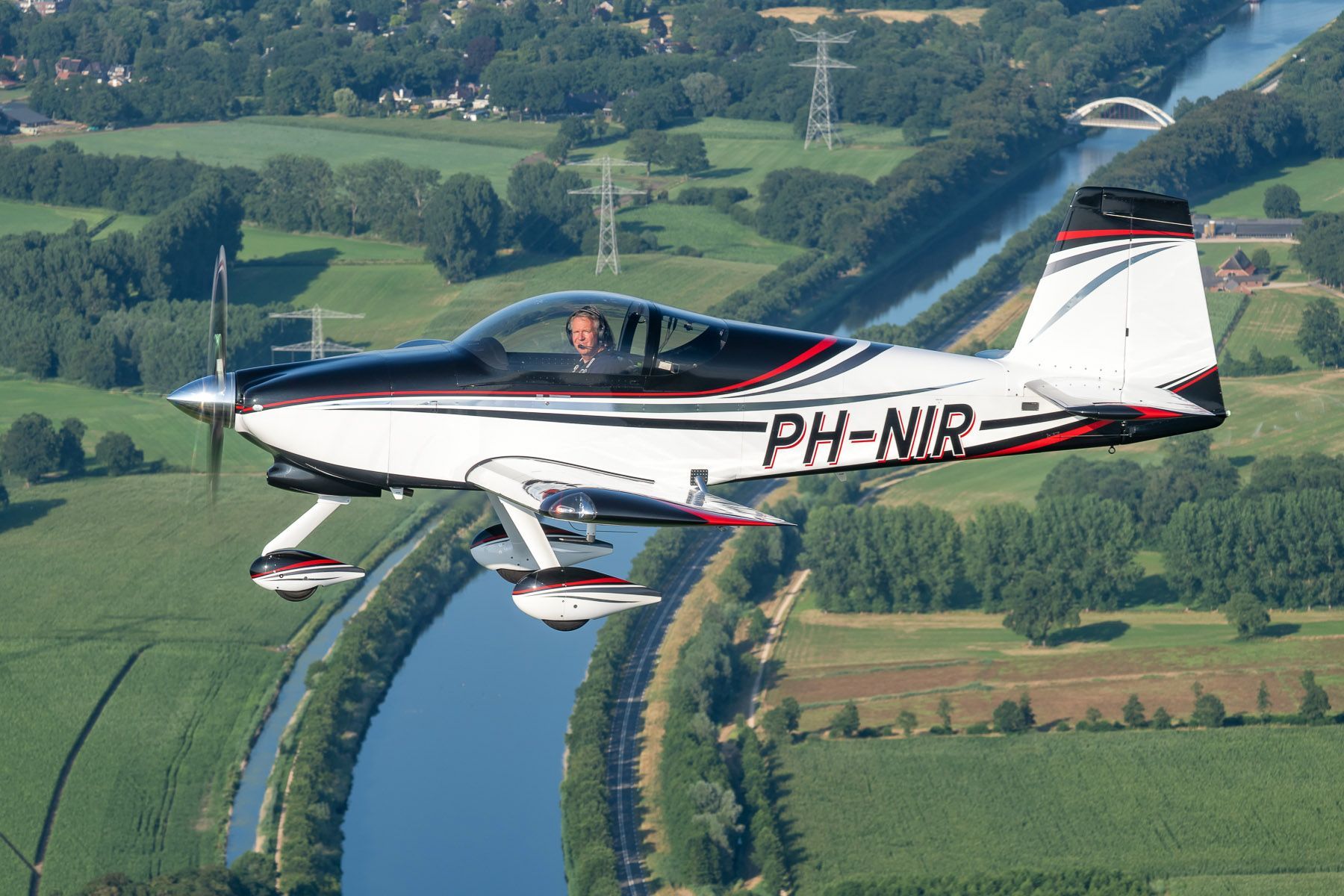
Some people fly aircraft, others even own one. And then there are those who build and fly their own machine. Ronald Niehoff is one of them, proudly showing his home-built Vans RV-9A.
Text and photos: Emiel Sloot
Published 29 July 2026
From flying training to plane builder
Before even considering such an adventure, it all commences with interest in the subject. Niehoff explains how his aviation fever started.
“A good friend of mine had been a member of Vliegclub Twente, the local flying club operating out of former Twenthe Air Base, for some time already. Looking at his vast amount of flying-related theory books, my impression was I would never master that. Not that I was planning to learn to fly anyway, but then my wife Carla gave me a voucher in August 2013 for a free lesson. Soon after, I redeemed this coupon, and became instantly hooked to aviation. From October 2013, I took both theoretical and flying lessons with SAS, a company at Teuge Airport. In June 2015, I got my private pilot’s license for aircraft.”
Getting his PPLA was the starting point for the next step.
“The theoretical lessons were given at SAS each Monday evening. During these occasions, I met Alfons Merlijn who was building a Pietenpol Air Camper at Dutch Nostalgic Wings at Hoogeveen Airfield, but still needed a license to fly. He told me great stories on his project and offered me to have a look. Of course I couldn’t resist the invitation, and after visiting his place, it became very clear to me that this was what I wanted to do as well: build my own airplane. Not a historic one like the Pietenpol, rather a cruiser to explore Europe. So I became a member of the Nederlandse Vereniging van Amateur Vliegtuigbouwers (NVAV – Dutch Experimental Aircraft Association) next.”
The building challenge
If there were any doubts, these were eliminated after Niehoff saw the beautiful RV-7A with registration PH-FLY built at Teuge by Erik Wildebeest.
“My wife Carla was almost even more enthousiastic than me, asking Erik numerous questions, like ‘is there room for my suitcase in this aircraft?’ Well, a smaller backpack might prove more appropriate,” Niehoff recalls the visit.
Various aspects were considered. Building from scratch using a design or assembling a complete kit? Use wood, aluminium or carbon fibre? Two or four seats? And what kind of engine to use?
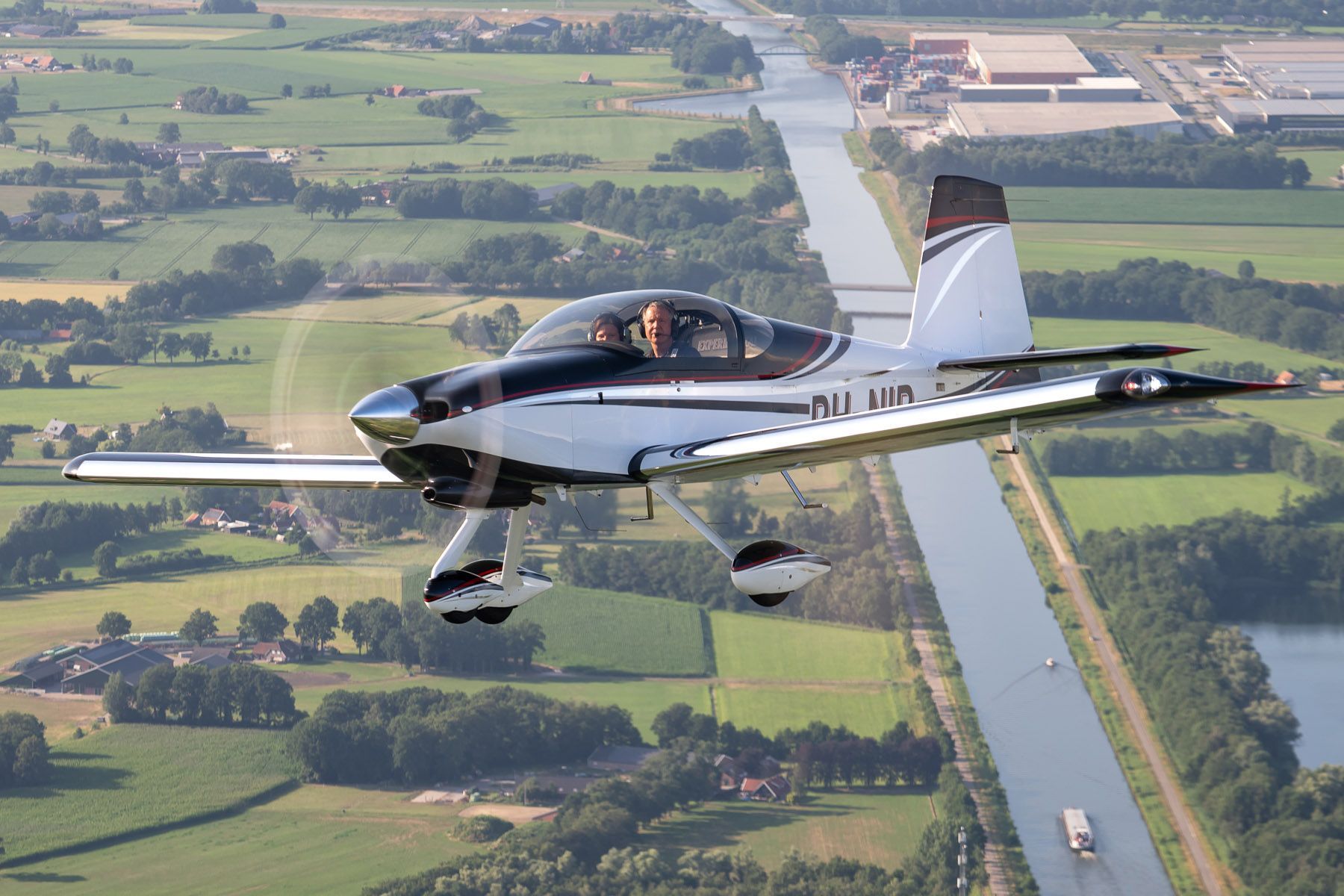
As a key player in home-built aircraft projects, Van’s Aviation offers a rather large variety in possibilities, and after considering all pros and cons, Niehoff decided to go for the RV-9A version.
On 1 June 2015, the first package arrived by truck containing wings, tail assembly and various tools.
Like many similar projects, things started to take shape at home. Niehoff explains: “Initially, all loose parts could easily be built and assembled in our own garage. Even the fuselage could be completed over there, including fitting the engine. However, for the alignment of the wings as well as the final assembly, I had to relocate all parts to the airfield at Twente. Of course, it would also be impossible to transport the aircraft by road once completed.”
So, how did Niehoff experience the whole process of building?
“There have been several occasions that proved to be quite a challenge. The earlier mentioned wing alignment was a good example. I had built both wings, flaps, ailerons and wingtips exactly according to Van’s guidelines. However, during the alignment it turned out that at the fuselage one wing’s trailing edge ended up slightly higher than the other one. I subsequently consulted my construction supervisor, the late Rens Verhoeven. Several remeasurements proved I had done nothing wrong, it just showed that all added tolerances turned out slightly different for both wings. In hindsight, it was no issue at all since the aircraft flies very straight, but of course you don’t know that at that time.”
“I would like to mention that I had great assistance during the building process. On many occasions I have been in touch with fellow members of the NVAV. Also, friends and family members helped out by the riveting of the wings, fuselage and fuel tanks,” Niehoff adds.
The ultimate experience of the first flight
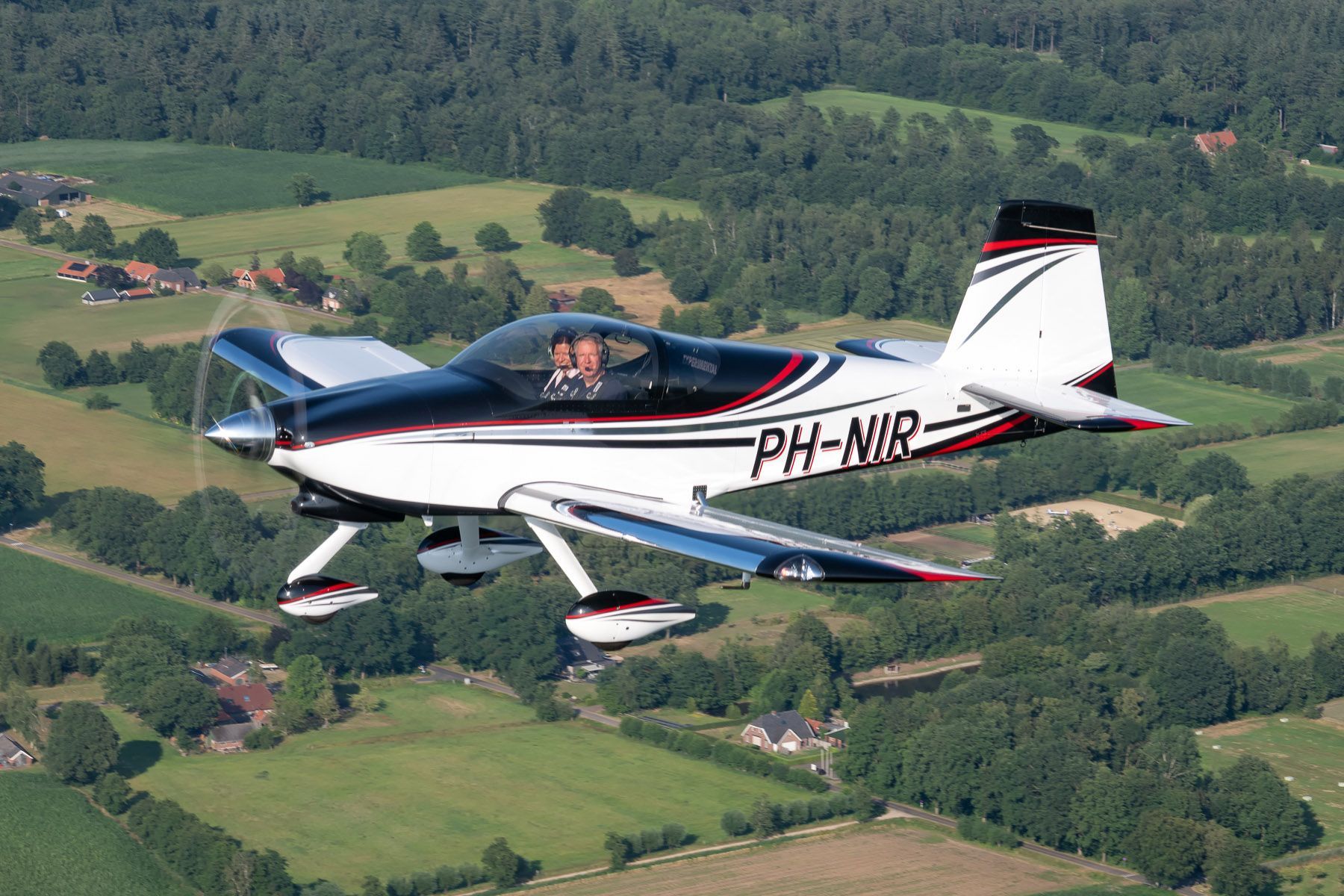
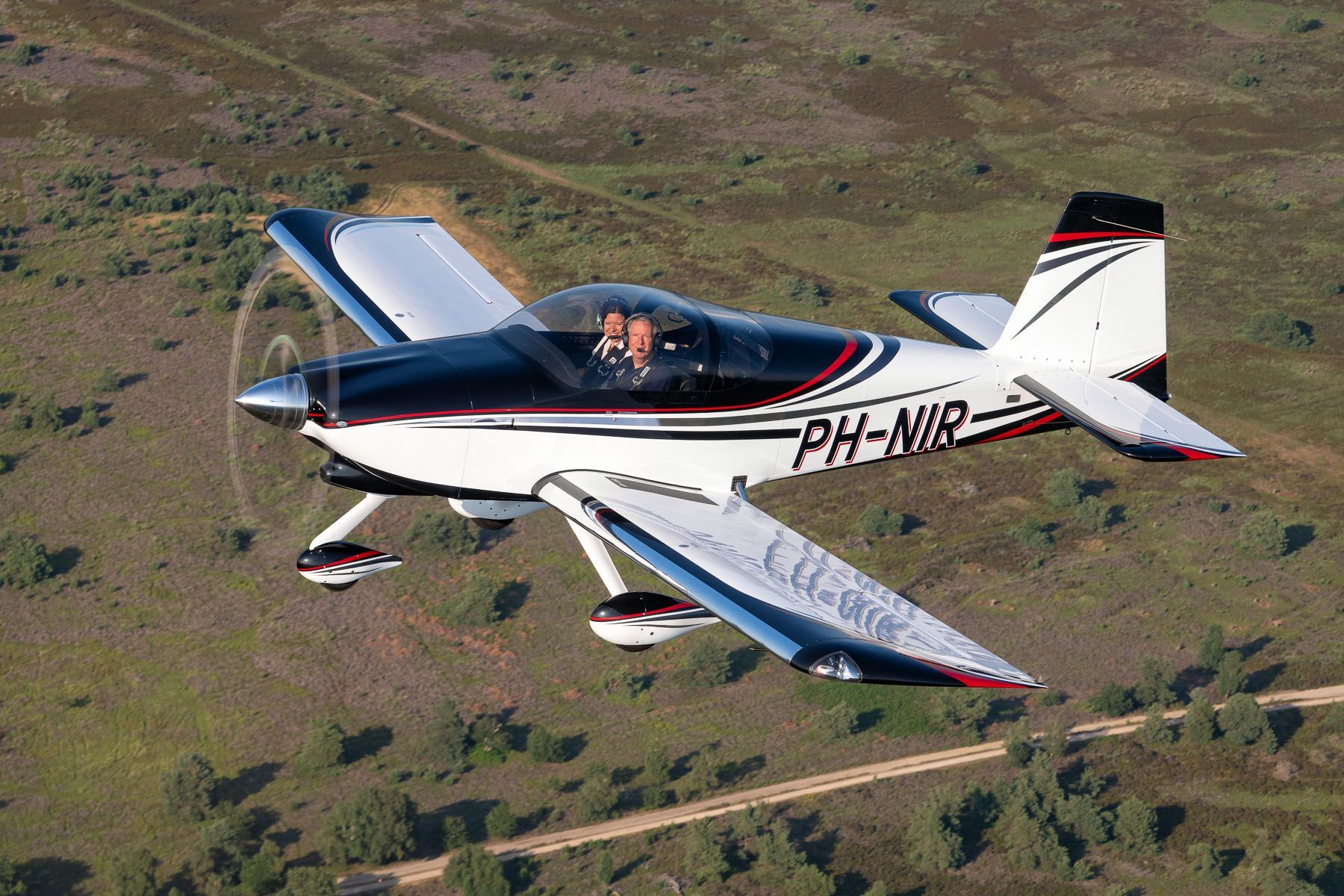
Before getting the fully assembled RV-9A airborne, the aircraft had to be painted. This was done by Albert Kip, a car repair facility in Niehoff’s domicile Oldenzaal. The design was copied from a US-based RV-7A (registration N23VC) owned by Jim Ellis, following approval by Scheme Designers who held the copyrights.
Furthermore, registration marks had to be adopted. Niehoff had reserved PH-NIR for his aircraft, short for NIehoff Ronald, and also the same abbreviation used for him at his work with the Eaton Industries company.
Fully completed, the PH-NIR underwent taxi trials at Twente Airfield. Meanwhile, checklists were made by Rob Groothuis, a fellow member of Vliegclub Twente. And then, it was finally time for the long-awaited moment. On 3 July 2020, both Rob Groothuis and Ronald Niehoff took the PH-NIR to the air for the first time.
“Of course, I wanted to join the first flight. I knew the aircraft’s Electronic Flight Instrument System (EFIS) better than Rob, and together we could assess if everything went as it should be. Although Rob had no previous experience with RV aircraft, he had flown many other types so this flight was actually a piece-of-cake.”
Following the first flight, many would follow. Niehoff is not the only one flying it, as also Rob Groothuis and Martin Breukers – the latter being Niehoff’s mate that sparked his interest in aviation over a decade ago – frequently take it for a ride.
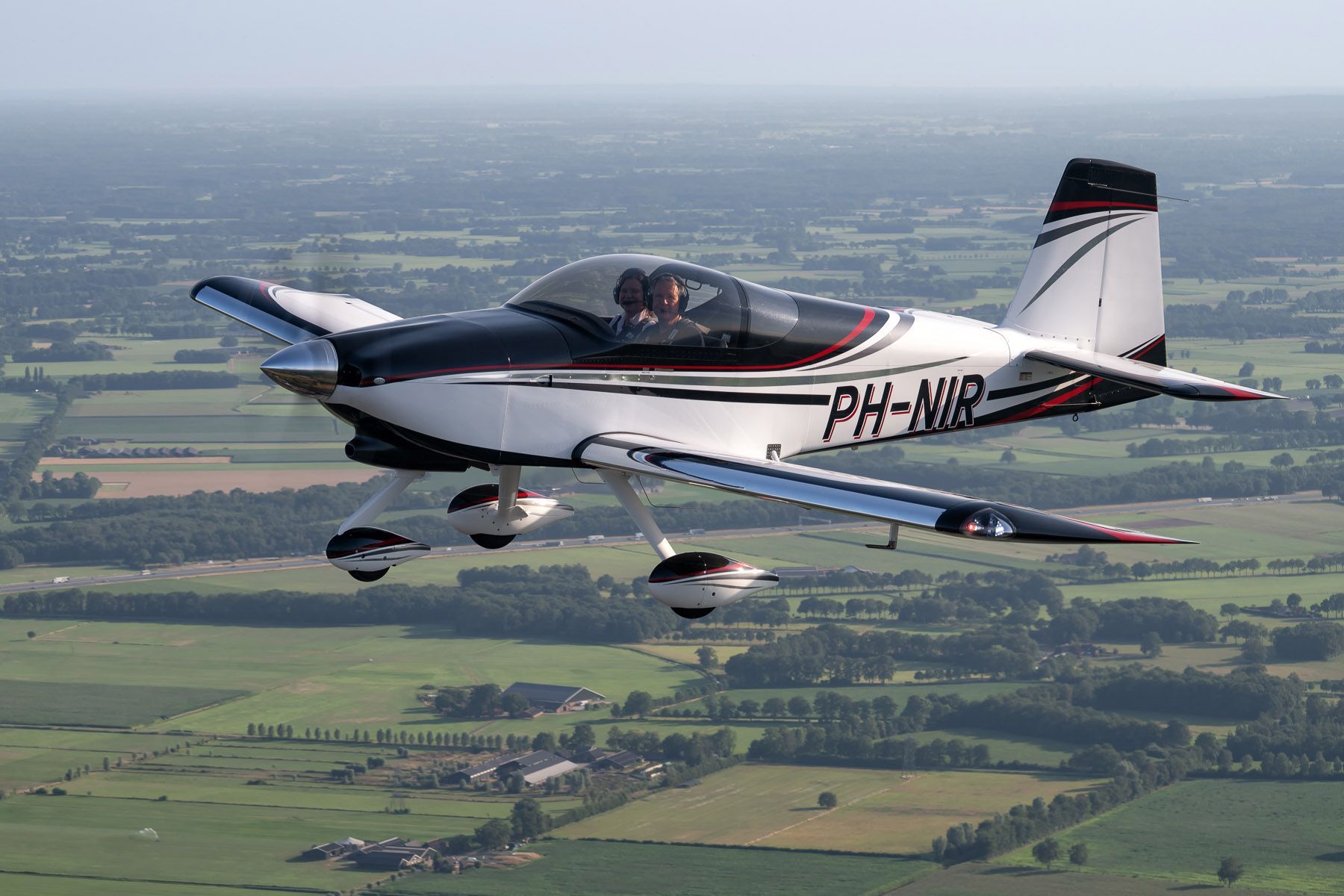
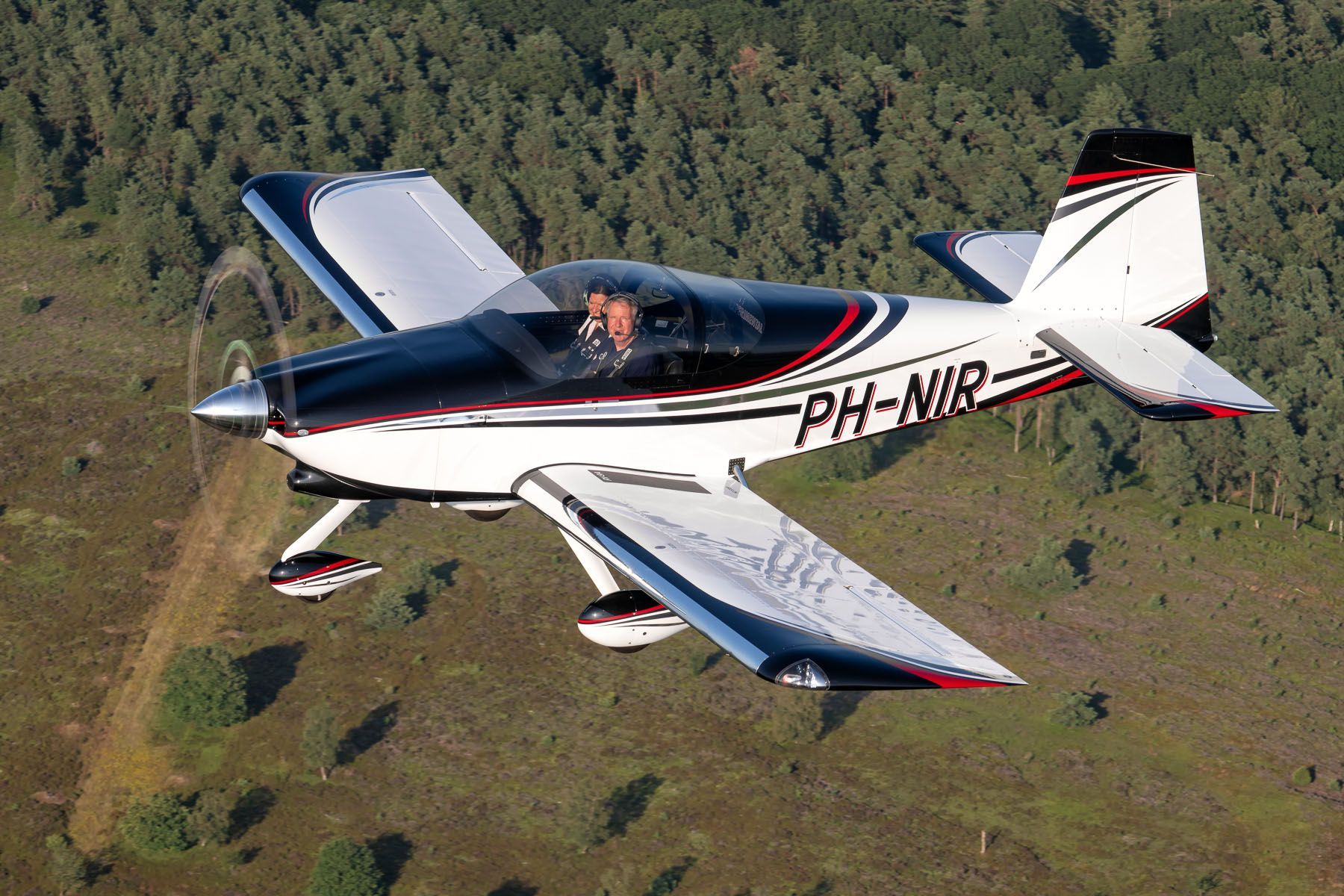
“In total I have logged some 170 hours as pilot-in-command on the PH-NIR, roughly half of the 350 the aircraft has flown so far (July 2026). Several nice destinations have already been visited, with a trip to Heligoland and another over the Swiss Alps to Annemasse near Geneva as absolute highlights. But also night VFR is very cool to do,” says Niehoff.
What’s next
With all the knowledge, would Niehoff care to build another aircraft?
“No, I have done it once, and not eager to do it again,” Ronald answers. “Of course, flying itself remains fantastic to do. Since 2020, I am a member of the local aero club's board, being the equipment commissioner. My background in aircraft building proves to be useful in understanding the maintenance requirements of certified aircraft types. Maintenance of these is only allowed when conducted by a certified organisation, while these planes fall under the administration of a so-called CAMO (Continuing Airworthiness Management Organisation). My PH-NIR is a so-called Annex 1 aircraft, allowing the builder to do its own maintenance and administration. My work for the aero club can be pretty challenging and time-consuming, but with the great team we have it is a satisfactory job.”
So, with his addiction to flying, Ronald Niehoff took his wife Carla and their great RV-9A to the air for a nice photo session. Witnessing their smiling faces, it isn’t hard to understand they are really enjoying it! ■
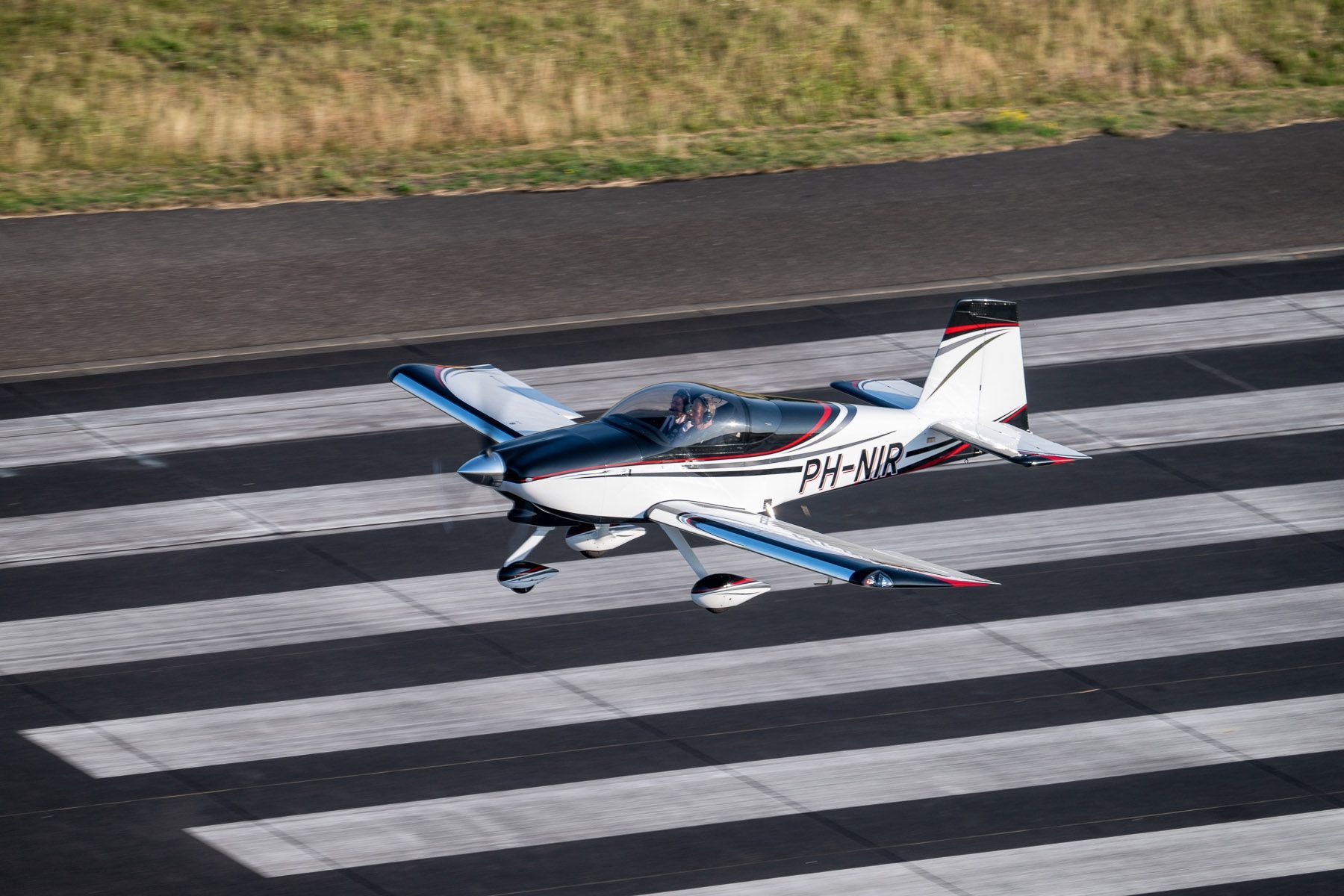
The author would like to thank Ronald Niehoff for his kind assistance to this report and images, as well as Bob Fischer for flying the photo ship for the occasion.