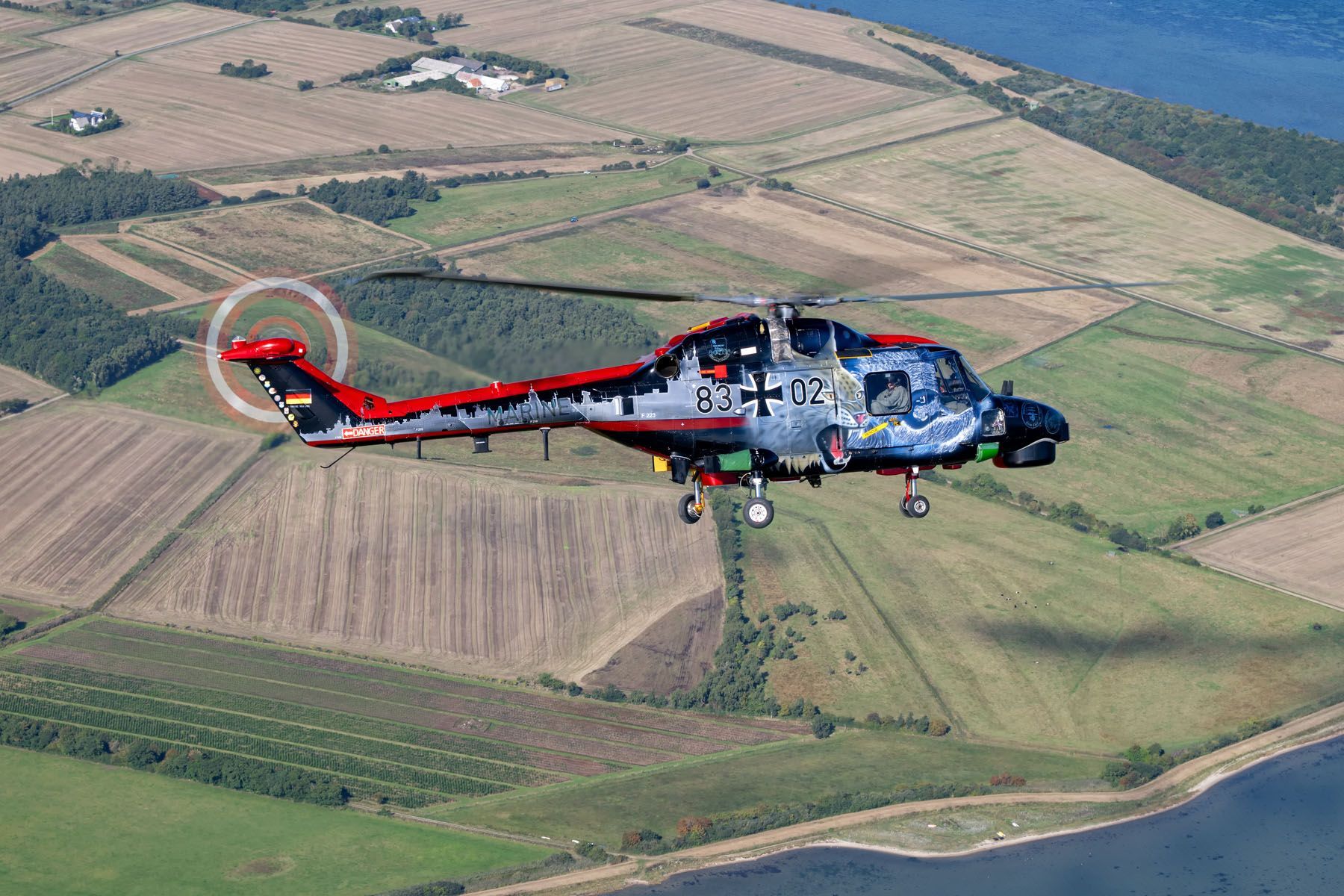
Following the retirement of the Sea King in 2024, the German Navy will take another iconic helicopter out of service two years later when the last Sea Lynx will make its final flight. Both types had served for decades, starting their careers in the Cold War.
Text and photos: Emiel Sloot
Published 21 September 2026
The start of the West-German rotary wing force
Speaking of the Cold War, let’s jump back in time to the late 1970s. To support the Bundesmarine (German Federal Navy) and NATO in maritime operations, the country’s naval air arm had a number of aviation assets. Both Marinefliegergeschwader (Naval Air Wing) 1 and 2 were equipped with two Staffel (squadrons) of Lockheed F-104G Starfighters for anti-ship missions, with MFG 2 also operating the RF-104G for photo reconnaissance. For patrolling the seas, MFG 3 used the Breguet Br 1150 Atlantic. MFG 5 was not assigned to NATO and offered search-and-rescue, surveillance, transport and liaison duties with their mixed fleet of Dornier Do 28 D-2 Skyservant aircraft and Westland Sea King Mk 41 helicopters.
Lacking however was a dedicated platform to operate from their vessels. Not surprisingly though, as the Bundesmarine did not have any ships capable for helicopter use anyway. Following its post-World War II resurrection in 1956, the German Navy would initially only have a very limited rotary wing force. Four Saunders Roe Skeeter Mk 51 (1958 till 1961) training helos and a dozen Bristol Sycamore Mk 52 (1958 till 1967) for rescue duties were bought to commence vertical flight with the navy. But then, on 1 September 1963, MFG 4 was established at Kiel-Holtenau with the purpose of anti-submarine warfare as well as mine searching and clearing. For this, the Sikorsky SH-34 was used but only in limited numbers. The single Staffel soon relocated to Westerland at the island of Sylt, however for organisation reasons, the squadron was adopted by MFG 5 on 1 July 1969, and MFG 4 subsequently disbanded. The last naval H-34s retired in 1974.
New onboard helicopters
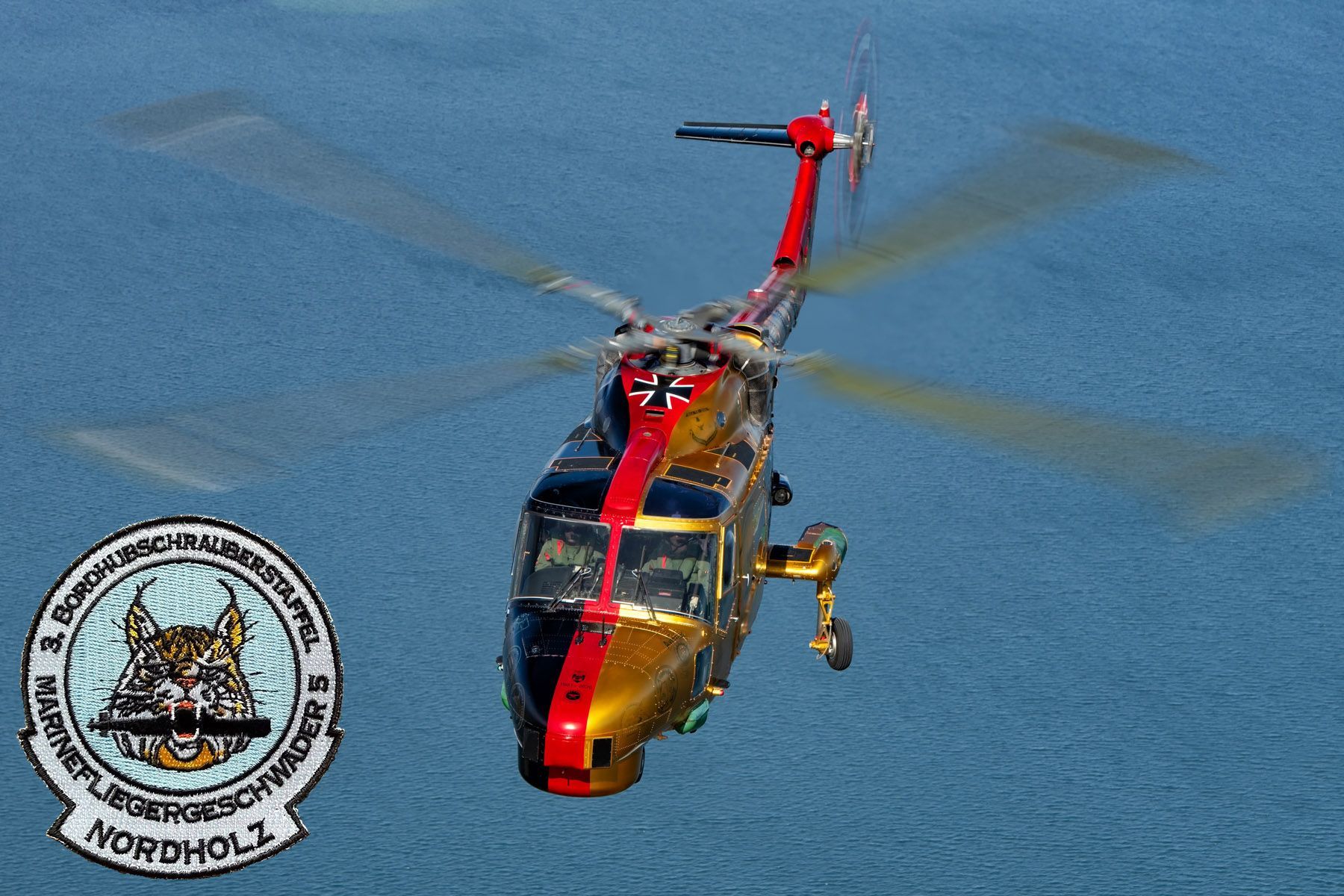
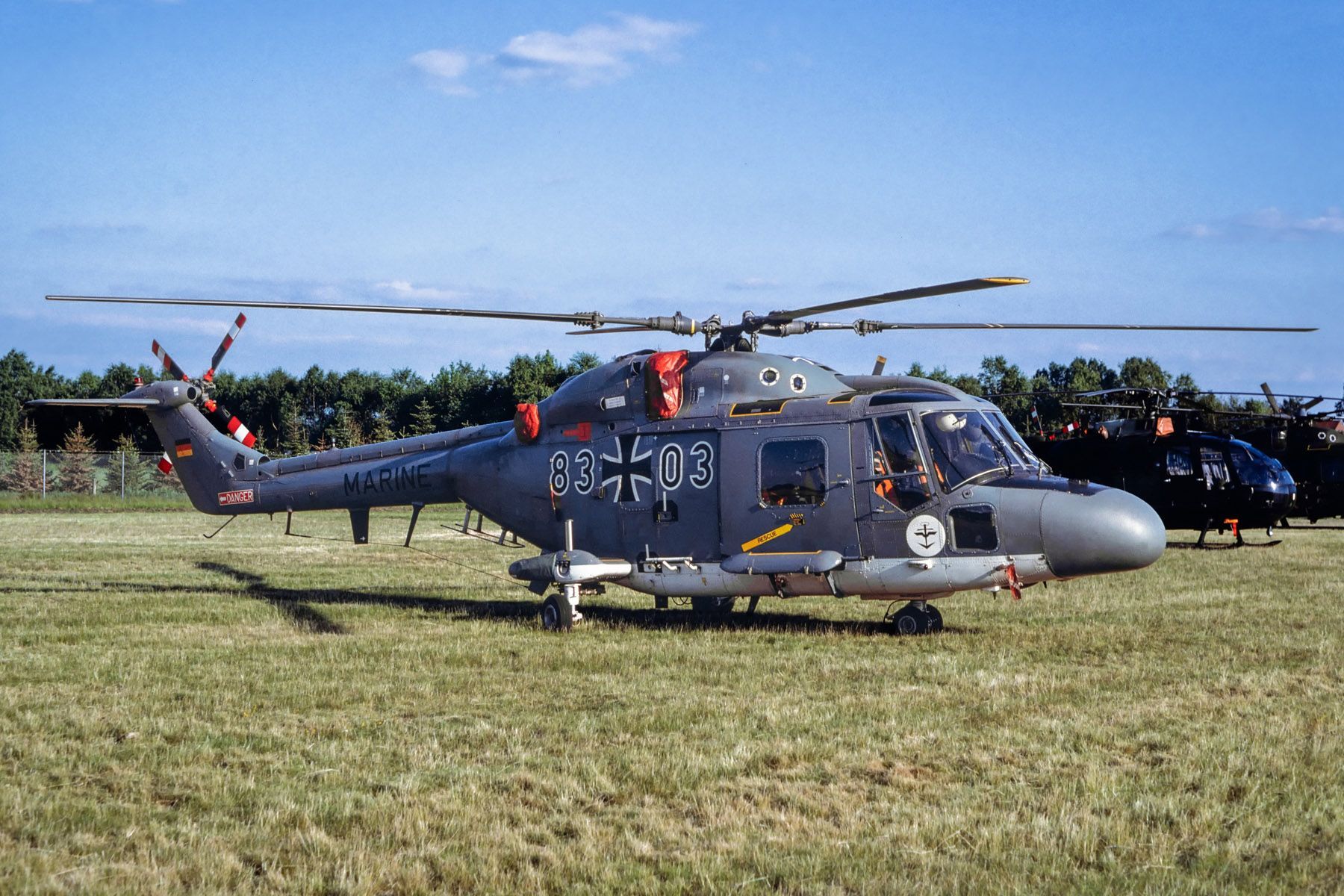
But then, in July 1979 to be exact, construction had started of the first of eight Bremen-class frigates, the first ones operated by the Bundesmarine that could actually house on-board helicopters. Of course, now was the time to acquire a decent suitable platform as well, and in the same year an order for 19 Lynx Mk 88 helicopters – dubbed Sea Lynx in (West-) Germany – was placed at Westland, UK. The first one was delivered on 9 September 1981, and the new helicopters would form the 3. Staffel of Marinefliegergeschwader 3 ‘Graf Zeppelin’ at Fliegerhorst Nordholz.
The original WG.13 prototype, a British-French joint venture between Westland and Sud Aviation, first flew on 21 March 1971. It proved to be a fast helicopter, and while planned multi-role, the first examples went to the British Army Air Corps, fitted with skid landing gear. The naval variant destined for the British Fleet Air Arm first flew on 10 February 1976. The Lynx has a basic crew of two consisting of a pilot and a system operator, while a third crew member in the cabin could for example operate the sonar.
The Mk 88 ordered by Germany a few years later was based on the Royal Navy’s Lynx HAS Mk 3 variant, which was an improved HAS Mk 2. It had a 180° Ferranti Seaspray Mk 1 multi-mode radar for target search-and-track, and navigation. The AQS-18 dipping sonar could be used to monitor below the surface, and two Mk 46 torpedoes could be fitted against enemy submarines. To counter surface vessels, light-weight BAe Dynamics Sea Skua semi-active radar-guided missiles could be carried.
Replacement postponed
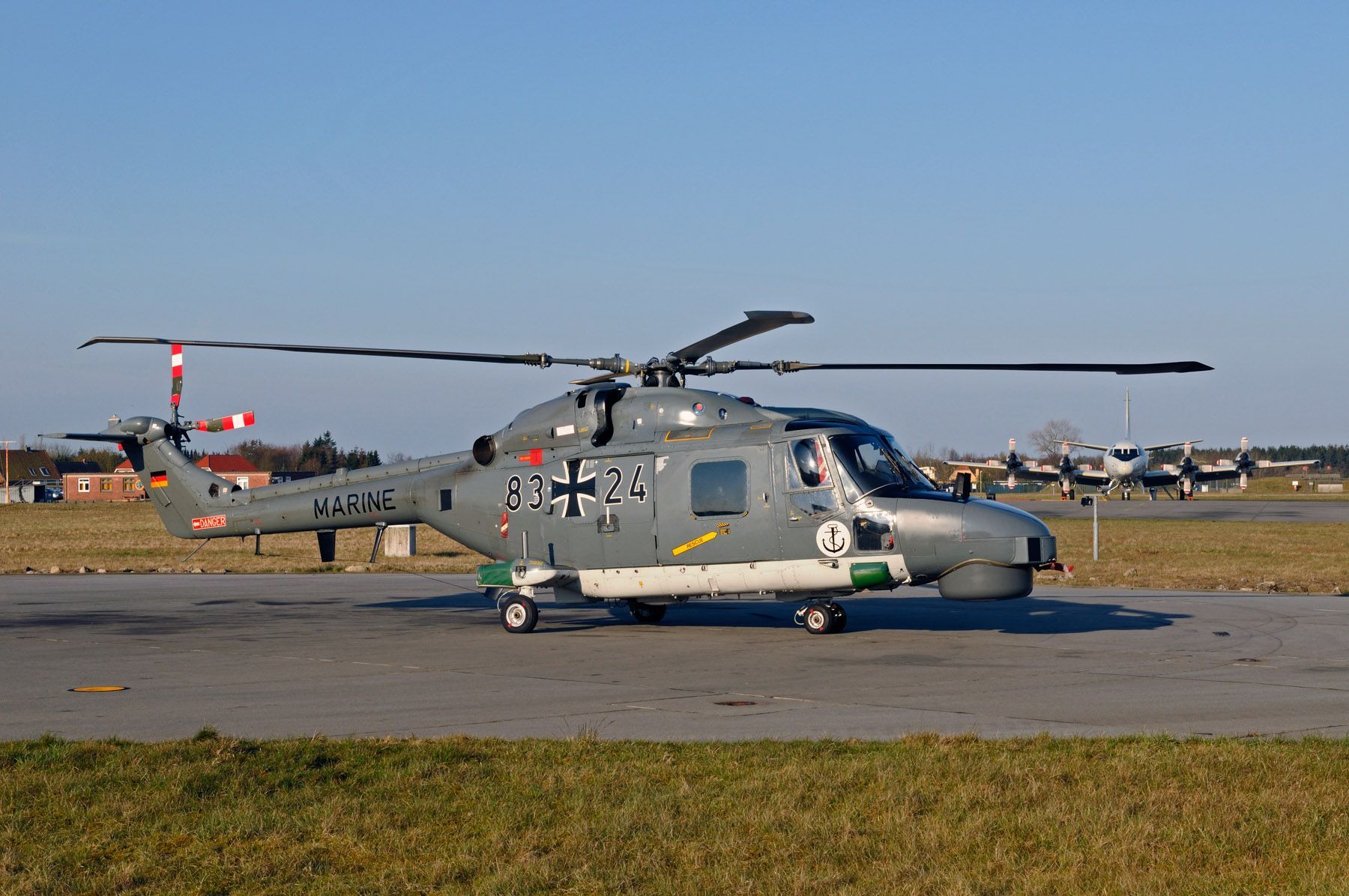
The Sea Lynx then quietly soldiered on during the last decade of the Cold War. At a certain point, the maritime variant of the NH Industries NH90 was selected to replace the Sea Lynx fleet in the future. However, while still in its development phase, it soon became clear that significant delays in that programme would force an extended operation for the existing equipment, regarding the destined NH90 customers. So like others, Germany had to look for a solution to extend the Sea Lynx duties well into the next millennium.
GKN Westland came to the rescue. That company had made available an extensive upgrade package for their product, called Super Lynx. Seven of these were ordered by Germany in October 1996 in a contract worth DM 312.5 million (then equivalent to USD 204 million). Serialled 83+20 to 83+26, these new additions known as Lynx Mk 88A (Germany refer to these as Sea Lynx as well) were delivered in 1999 and 2000.
Several Lynx operators decided to upgrade their existing fleet as well, and Germany was no exception. Therefore, another contract worth DM 255 million (USD 132 million) was signed with GKN Westland in 1998 to carry out these works. Of the original 19 Mk 88s, two (serialled 83+01 and 83+16) had been written off in accidents, and it was the intention to upgrade all remaining 17 helicopters. However, between signing the deal and the conversion process, two more (83+08 and 83+14) were lost before these could be handed over to the company, so eventually only 15 were upgraded.
BERP and other improvements
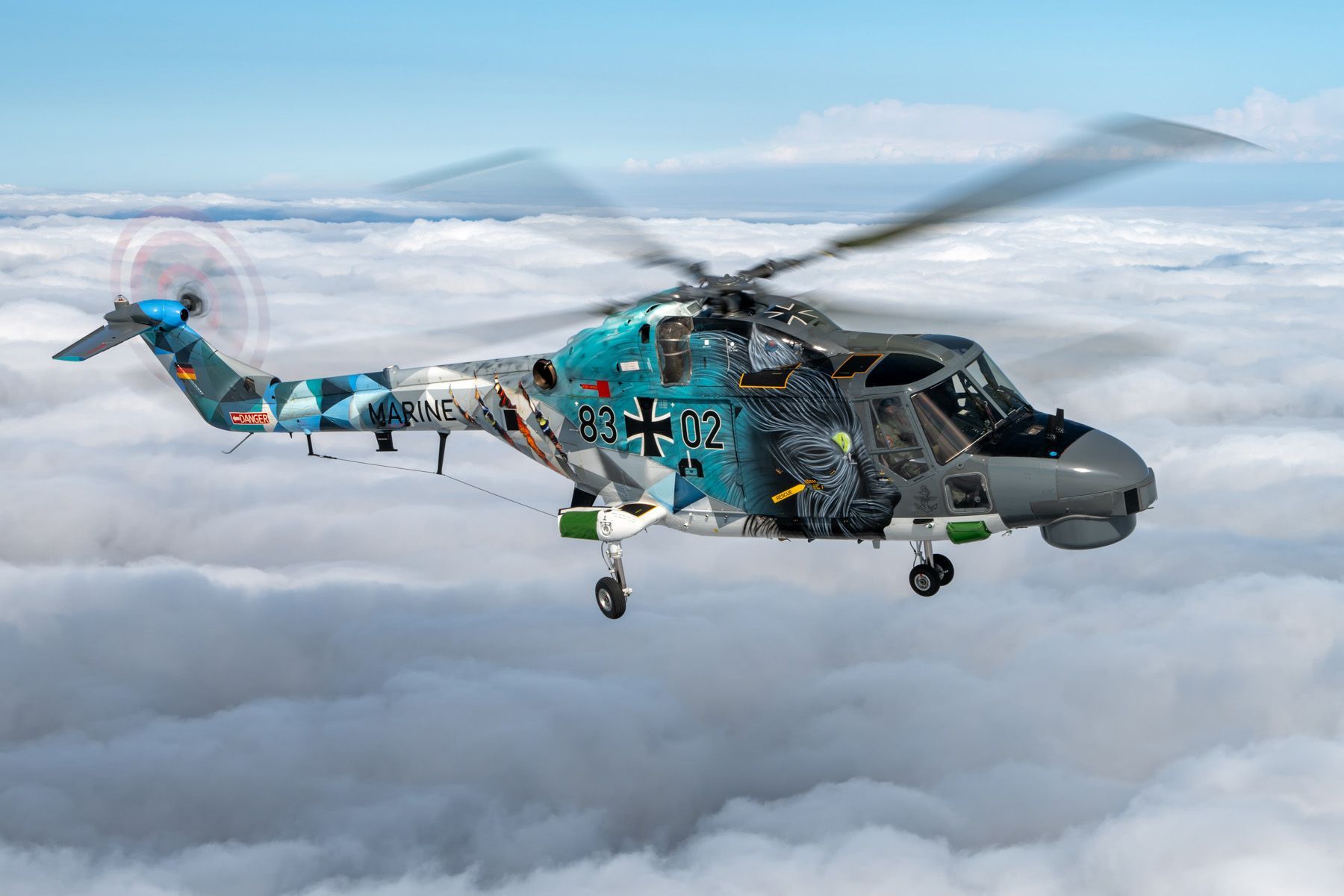
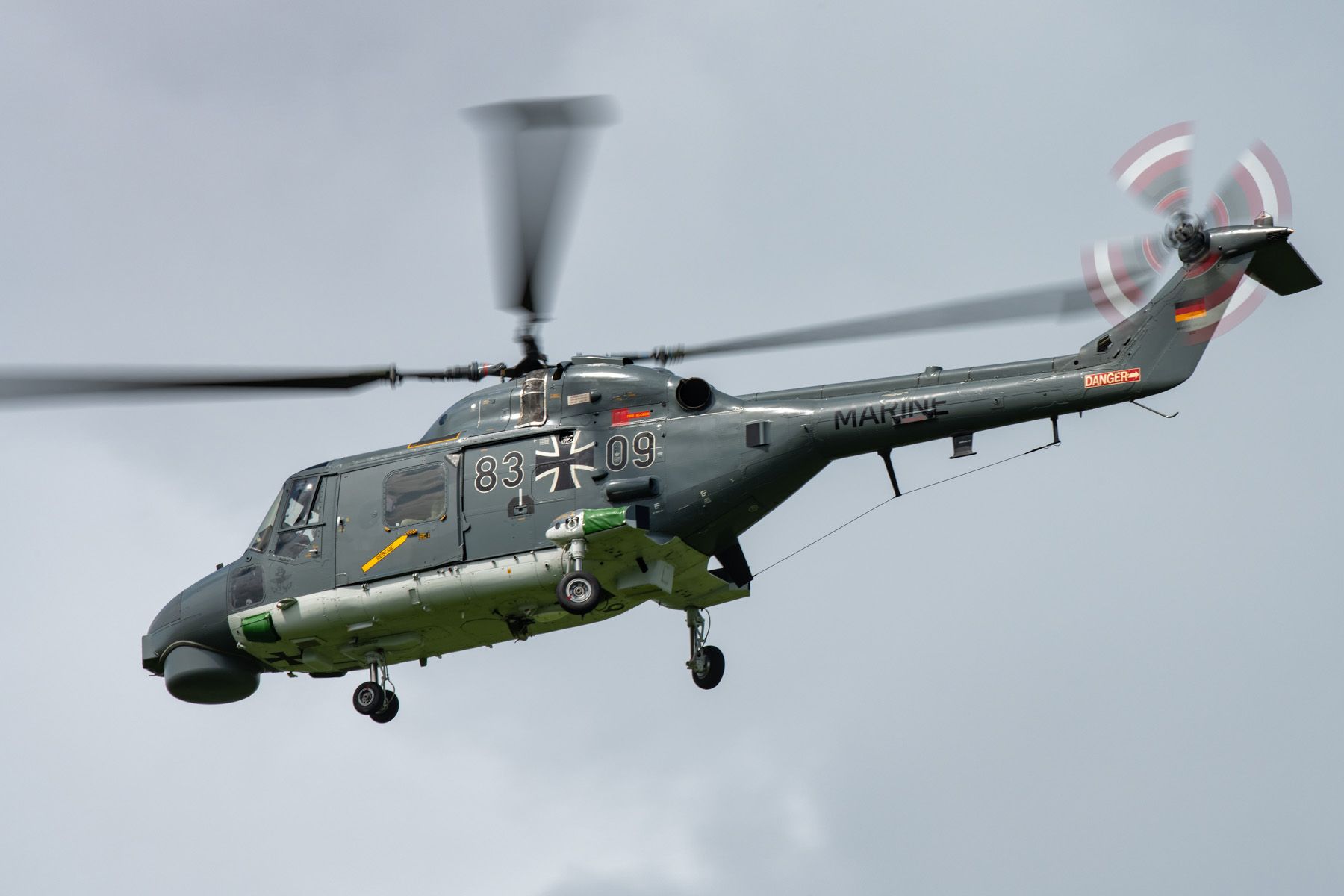
So what did GKN Westland exactly do? Basically, most of the airframe was dismantled and rebuilt with new components. As a result, all helicopters received a new factory serial number. The turboshaft engines were uprated to the Rolls-Royce Gem Mk 1017, and new so-called BERP (British Experimental Rotor Programme) blades were fitted. These carbon and glass fibre rotor blades, distinguished by their peddle tips, provide a lift increase of 37 percent, reduce vibration and give the helicopter greater performance in terms of speed and hover. They also require less maintenance, are easier to repair and have an increased lifespan. Also the direction of the tail rotor was reversed. This improved yaw control authority especially at higher weights, and also reduced noise. The old Racal RNS252 NCDU mission computer was replaced by the Rockwell Collins CDU-7000. A Seaspray 3000 radar was built in, still able to direct the Sea Skua missile against surface targets. Apart from the chin-mounted radar antenna, the nose was redesigned so a GEC Sensors MRT FLIR could be mounted on top of it. This was generally only done when the Sea Lynx deployed at sea.
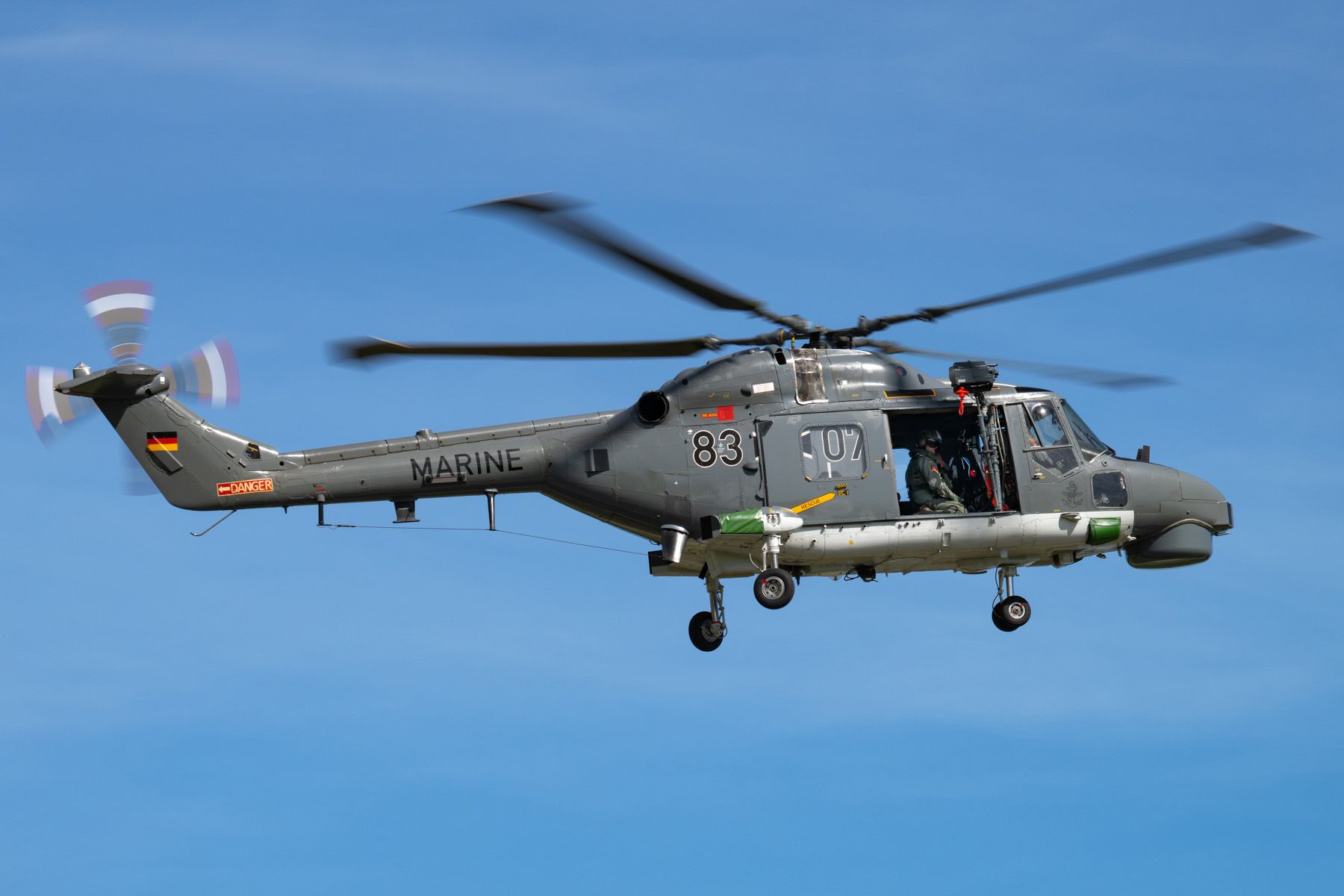
For anti-submarine warfare, the AQS-18D sonar was retained while the helicopter could be armed with a pair of Mk 46 mod 2 torpedoes. A FN Herstal M3M 12.7-mm gun can be installed in the door opening, operated by crew in the aft cabin. Surprisingly, no ESM suite for self protection was installed.
After completion of the conversion programme, the original hull of 83+07 was used to become a ground instructional airframe at Nordholz, and reserialled ‘83+55.’ In the workshop, it joined 83+01 (now ‘83+54’) that earlier became a similar training platform, following its unlucky accident on 3 December 1993.
More new stuff, and a new base
In 2007, a modification programme was started incorporating a new navigation management system, GPS and two multi-function displays for primary flight and navigation data. Flight trials with the first glass-cockpit Sea Lynx started in May 2007, and by April 2008 a second upgraded Sea Lynx had been delivered by Eurocopter. Electro-optical and infrared sensors were added to the helicopters by Seles ES in a contract signed in 2013.
Crew training was done partially at De Kooy, Netherlands where the Marineflieger was one of the participating countries in the Joint Lynx Simulator Training Establishment (JLSTE). After the Royal Netherlands Navy retired their Lynx fleet in 2012, the German Navy took over the full mission flight simulator and moved this facility to Nordholz. The Portuguese Navy, with five Super Lynx helicopters another partner in this programme, also subsequently moved their training to Germany.
In the following years, the Sea Lynx armament option was expanded with the EuroTorp MU90 light-weight torpedo, replacing the Mk 46 Mod 2 torpedo.
With the planned closure of Kiel-Holtenau as a naval air station, Marinefliegergeschwader 5 relocated along with its Sea King fleet to Nordholz. The move was started in June 2012 and completed five months later. To concentrate all rotary wing operations within one wing, the 3. Staffel of MFG 3 ‘Graf Zeppelin’ transferred to MFG 5. As both MFG 1 and 2 had already disbanded many years before, Nordholz now became the sole German naval air base.
Sailing the world
After the Cold War had ended, NATO had to reinvent itself and over the years, operations expanded outside the classic territory. Furthermore, various missions under the flag of entities like the United Nations or the European Union have been conducted over the last decades. Germany participated in a number of these, and some included deployment of one or more Sea Lynx.
Operation Active Endeavour started as a NATO operation in October 2001. By patrolling the Mediterranean and the Strait of Gibraltar, it was aimed against the movement of terrorists and possible weapons of mass destruction. In July 2016 it was surpassed by Operation Sea Guardian in which Germany had no active role.
Operation Enduring Freedom, running from 2001 till 2021, was basically directed against the Taliban in Afghanistan, but as a sort of spin-off, there were also operations around the Horn of Africa (OEF-HOA). German frigates and Sea Lynxes were part of this, patrolling over the Red Sea and Gulf of Aden off Djibouti to prevent Al-Qaeda terrorists to reach Somalia. The later EU operation Atalanta, or officially European Union Naval Force (EUNAVFOR) Somalia, basically covers the same area. Launched in December 2008, Atalanta is meant to prevent and combat acts of piracy.
When Houthi rebels in Yemen on the other side of those sea straits became quite a nuisance to international shipping, the EU started another mission in February 2024. Operation EUNAVFOR Aspides counters that particular threat, and from the start till late April 2024, the frigate F 221 Hessen participated with two Sea Lynx on board. On 21 March 2024, one of these destroyed an uncrewed Houthi sea drone that had approached a convoy of civil merchant vessels. Sea Lynx Mk 88A 83+15 received a kill-marking for this achievement.
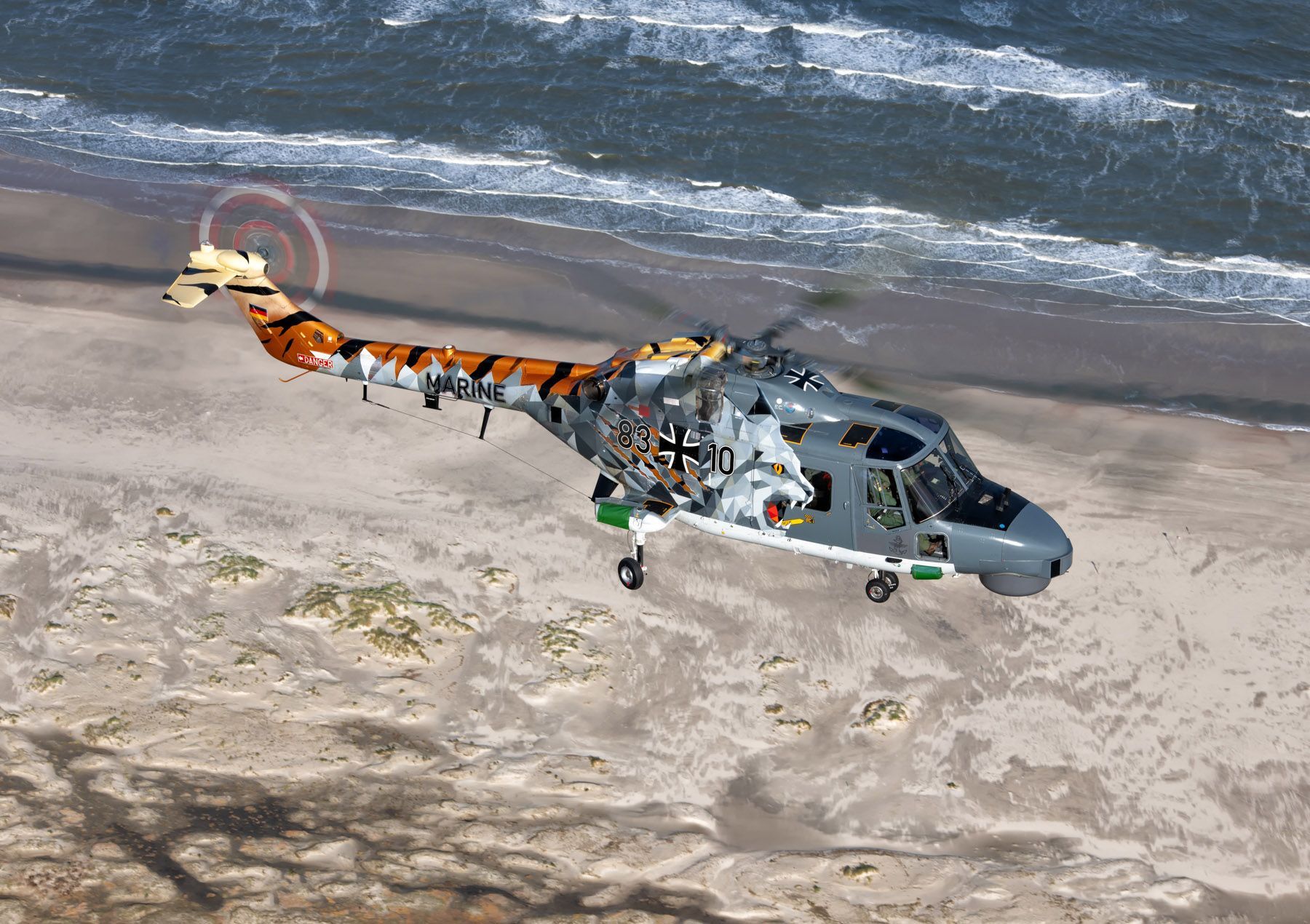
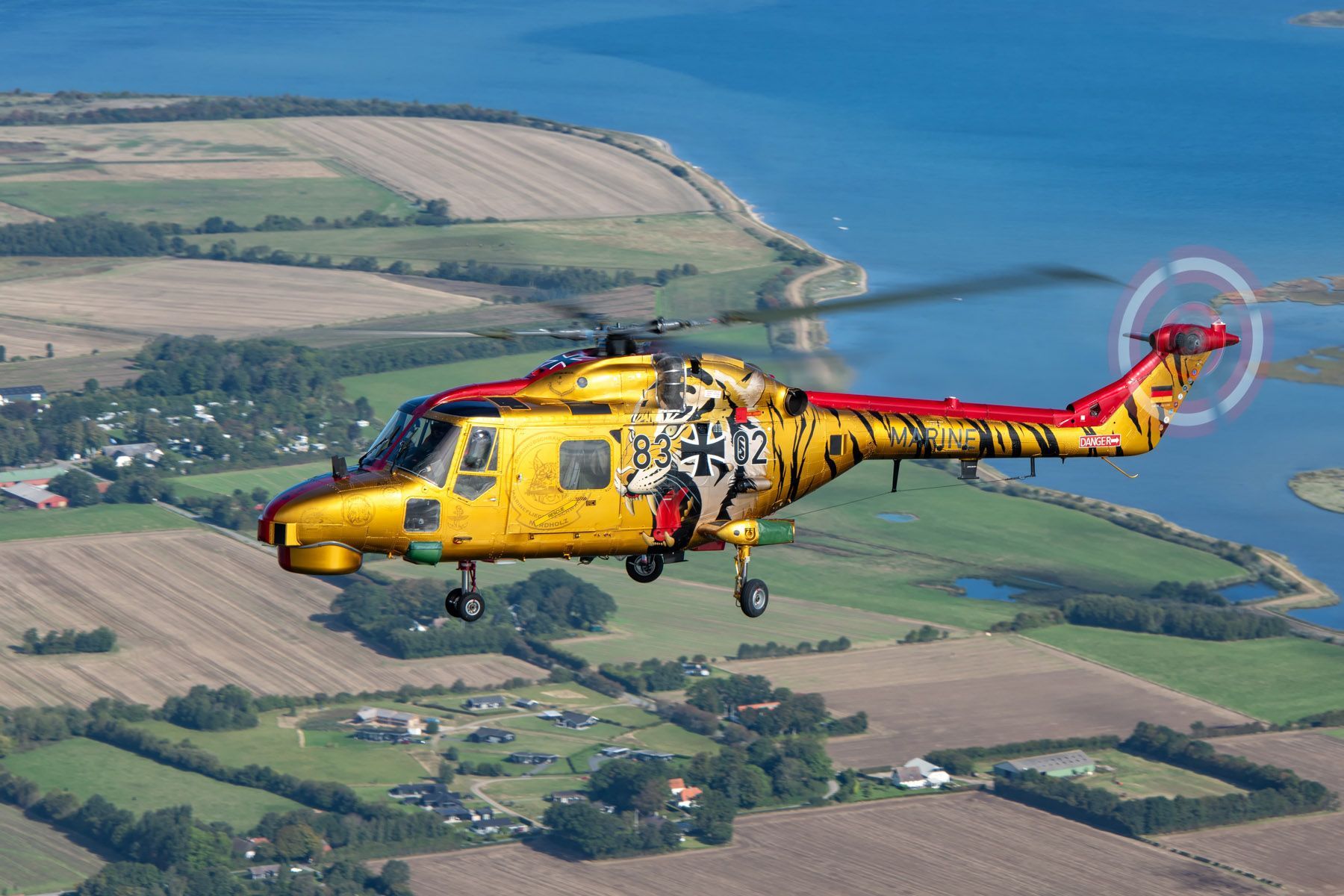
Quite a different event in which the 3. Bordhubschrauberstaffel participates is the NATO Tiger Meet. The first presence was during the NTM 2024 at Schleswig-Jagel. Fun to mention is that this location is a former Marineflieger base. Sea Lynx 83+02 received a nice paint scheme for this (air-to-air photo report can be found here), and one year later, for NTM 2025 at Beja, Portugal, 83+10 was sent over in another striking livery (click here for that particular air-to-air photo report). The 2026 edition at Araxos, Greece was skipped. Future Tiger Meets will see Sea Tigers instead of Sea Lynxes.
The curtain falls
Despite considerable delays, the replacement of the Sea Lynx fleet was finally inevitable. A total of 31 NH90 MRFH (Multi-Role Frigate Helicopter) were ordered to continue amongst others the anti-submarine warfare mission in the future. The first of these so-called Sea Tigers was handed over at Nordholz on 16 December 2025. The final example is planned for delivery in 2030. The Sea Tigers join 18 similar NH90 NTH Sea Lions that replaced the Sea Kings a few years before.
On 5 June 2026, two Sea Lynx (83+25 and 83+26) returned to their home base from the type’s final deployment to sea. A day later, the Tag der Bundeswehr at Nordholz was one of the last public appearances of the helicopter. A week-long ‘Sea Lynx Golden Tour’ farewell trip was done between 6 and 10 July 2026, with the specially painted 83+02 overflying most Bundeswehr airfields.
Meanwhile, the disposal of airframes had already begun. Some airframes had been retired over the last years, while some were ferried to the HeliOperations company in the UK with a yet unknown final destination (though likely Ukraine as indicated earlier by the German Naval Aviation commander, Capt. Broder Nielsen. Sea Lynxes involved were 83+17 on 31 March 2026, followed by 83+06 on 7 April, 83+19 on 28 April, and both 83+23 and 25 on 4 August.
The last flight planned late 2026 will mark the end of 45 years of operations of this fast and remarkable helicopter. ■
For the number- and fact nerds who would like to know a bit more, here are some details you might appreciate.
Organisation
The (West-)German Navy was established in 1956 and called Bundesmarine. In 1995, five years after the reunification of the German Federal Republic and the German Democratic Republic, the name was changed into Deutsche Marine.
Regarding the naval aviation units: these initially fell under the Kommando der Marineflieger (from 15 July 1956 till 31 Dec 1966). Then the Marinefliegerkommando took over (1 Jan 1967 – 10 July 1969) followed by the Marinefliegerdivision (11 July 1969 – 31 Mar 1994) and the Flottille der Marineflieger (1 Apr 1994 – 30 Jun 2006). Between 1 July 2006 and 8 Oct 2012 both remaining units MFG 3 & 5 reported directly to the Flottenkommando. Finally, from 8 October 2012 till present, it is (again) the Marinefliegerkommando (MFlgKdo) serving a parent unit.
Serials
The nineteen Sea Lynx Mk 88 were serialled 83+01 (constructor’s number 220); 83+02 (223, later 422); 83+03 (225, later 404); 83+04 (231, later 427); 83+05 (246, later 419); 83+06 (252, later 414); 83+07 (258, later 421); 83+08 (261); 83+09 (263, later 412); 83+10 (266, later 429); 83+11 (269, later 417); 83+12 (272, later 428); 83+13 (326, later 423); 83+14 (327); 83+15 (341, later 430); 83+16 (342); 83+17 (343, later 415); 83+18 (344, later 420); and 83+19 (345, later 413).
Fifteen of these were converted to Sea Lynx Mk 88A. These are the ones listed above, where a follow-up construction number is mentioned.
Seven Sea Lynx Mk 88As were ordered straight from the factory and received serials 83+20 (388); 83+21 (389); 83+22 (391); 83+23 (392); 83+24 (393); 83+25 (396); and 83+26 (397).
Two Mk 88s ended up as ground instructional airframe at Nordholz and received new serials. These were 83+54 (formerly 83+01 that was involved in a crash) and 83+55 (for which apparently the old fuselage of 83+07 was re-used).
During 2026, 83+06, 17, 19, 23 and 25 went to HeliOperations, UK for a future operator.
Mishaps
During its 40+ years of service, only four were written off following accidents. One ended up as ground instructional airframe, the other three rest on the sea bed.
On 3 December 1993, 83+01 carried out an ambulance mission. It took off from Westerland at Sylt with destination Heide hospital to drop off a patient that was involved in a car accident. However, the helicopter hit a power line in poor visibility and crashed near Wesselburen. The car crash victim and a crew member perished, both pilots and a doctor were injured. The airframe was later used as ground instructional airframe and reserialled 83+54.
While deployed at F 207 Bremen and apparently practising single engine failure practice, 83+16 ditched into the sea near Porto Alegre, Brazil on 30 January 1994. The crew was rescued, but the helicopter could not be retrieved and sank.
On 30 October 1999, 83+08 crashed into the Mediterranean some 65 NM West of Sicily while deployed to F 213 Augsburg. Both pilots were injured but rescued, a third crew member (from France) went missing as the helicopter sank.
The final accident involved 83+14 on 16 February 2000. The Sea Lynx ditched in the Caribbean some 20 NM West of Curacao, following a forced sea landing due to severe vibrations while operating from F 208 Niedersachsen. The helicopter sank, fortunately the crew of four was rescued by a Dutch Lynx.
German naval vessels able for rotary wing operations
The first type of frigate able to take a helicopter on deployment to sea was the F 122 / Bremen-class frigate. Entering service in 1982, these were F 207 Bremen; F 208 Niedersachsen; F 209 Rheinland-Pfalz; F 210 Emden; F 211 Köln; F 212 Karlsruhe; F 213 Augsburg; and F 214 Lübeck. The hangar had space for two Sea Lynx each. The last one was decommissioned in 2022.
Next were four F 123 / Brandenburg-class frigates being F 215 Brandenburg; F 216 Schleswig-Holstein; F 217 Bayern; and F 218 Mecklenburg-Vorpommern. The first one came into service in 1994 and like the Bremen-class, each could take two Sea Lynx. Although still operational when the Sea Lynx fleet was retired, their hangar is too small to accommodate the NH90 MRFH.
The hangars of three F 124 / Sachsen-class frigates commissioned from 2004– being F 219 Sachsen; F 220 Hamburg; and F 221 Hessen – can house both the Sea Lynx (2 each) and the NH90 MRFH, however the hangar doors are too small for the new Sea Tiger. To fix this, these are adapted by Turbo Technik from 2026.
The latest F 125 / Baden-Württemberg-class frigates F 222 Baden-Württemberg; F 223 Nordrhein-Westfalen; F 224 Sachsen-Anhalt; and F 225 Rheinland-Pfalz are capable for both Sea Lynx and Sea Tigers. The first of this class entered service in 2019.
Beside these frigates, the navy will receive ten K 130 / Braunschweig-class corvettes: F 260 Braunschweig; F 261 Magdeburg; F 262 Erfurt; F 263 Oldenburg; F 264 Ludwigshafen am Rhein; F 265 Köln; F 266 Emden; F 267 Karlsruhe; F 268 Augsburg; and F 269 Lübeck. The first corvette entered service in 2008 but with delivery still ongoing in 2026, some of these will never see a Sea Lynx on board. Anyway, these vessels have a helicopter deck only, for a single Sea Lynx or Sea Tiger, so no hangar space for these.
Finally, helicopters could operate from a few replenishment ships, notably the A 1411 Berlin; A 1412 Frankfurt am Main; and A 1413 Bonn of the 702 / Berlin-class, in service since 2001. Each are able to carry two helicopters. Six smaller 404 / Elbe-class replenishment ships – A 511 Elbe; A 512 Mosel; A 513 Rhein; A 514 Werra; A 515 Main; and A 516 Donau – have a flight deck that allow helicopter operations, but generally none are carried while at sea. These tenders are in service since 1993.