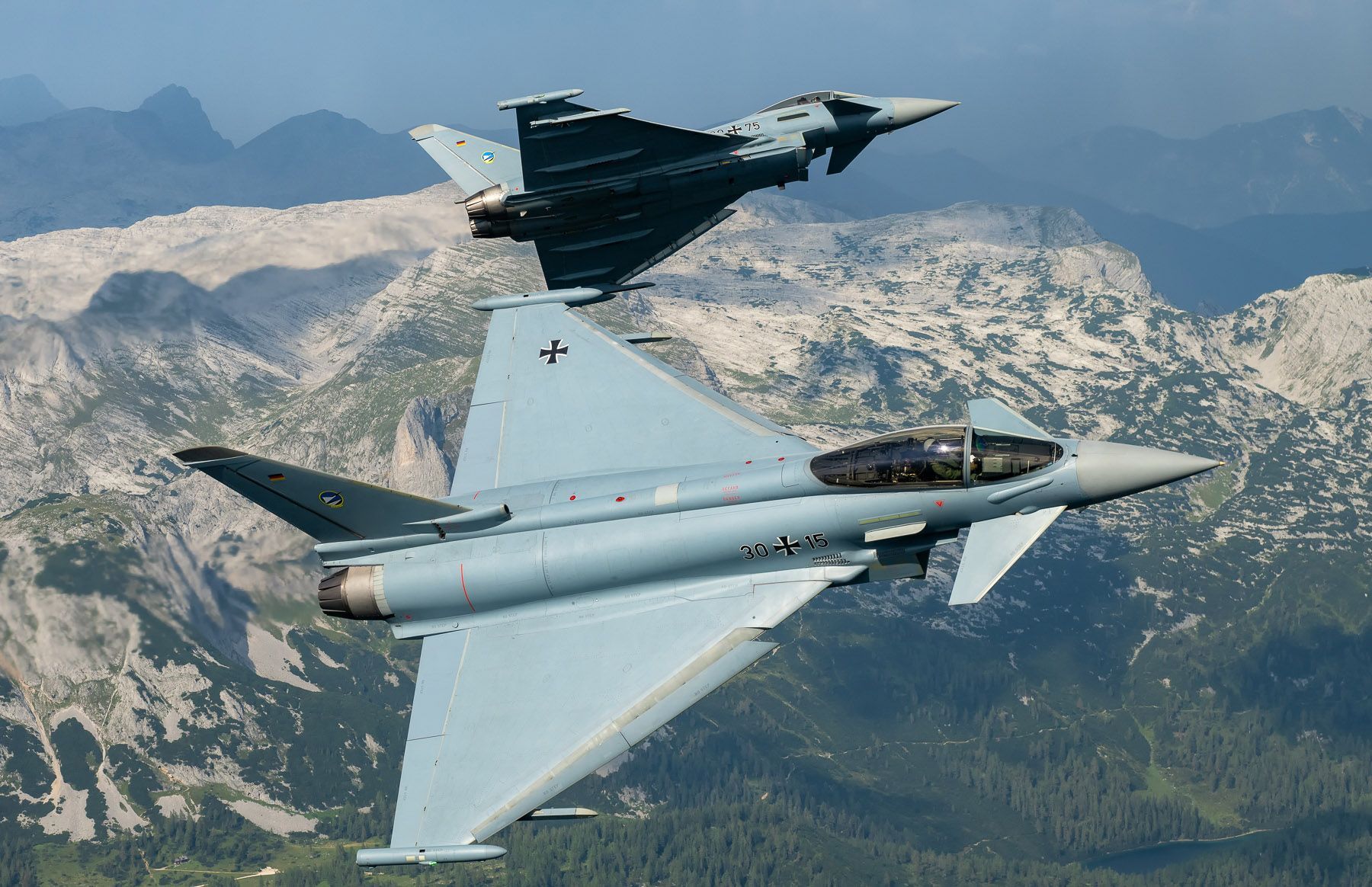
Eurofighter in service with Germany's Luftwaffe
Part 3: Acquisition, assembly and upgrades
Tranches, blocks, phase enhancements – Eurofighter nomenclature can be quite confusing and overwhelming. In this section, we offer a detailed look into the German procurement timeline and production standards of the various acquisition batches.
Text: Emiel Sloot
Photos: Emiel Sloot (unless stated otherwise)
Last updated: 5 August 2026
Umbrella framework
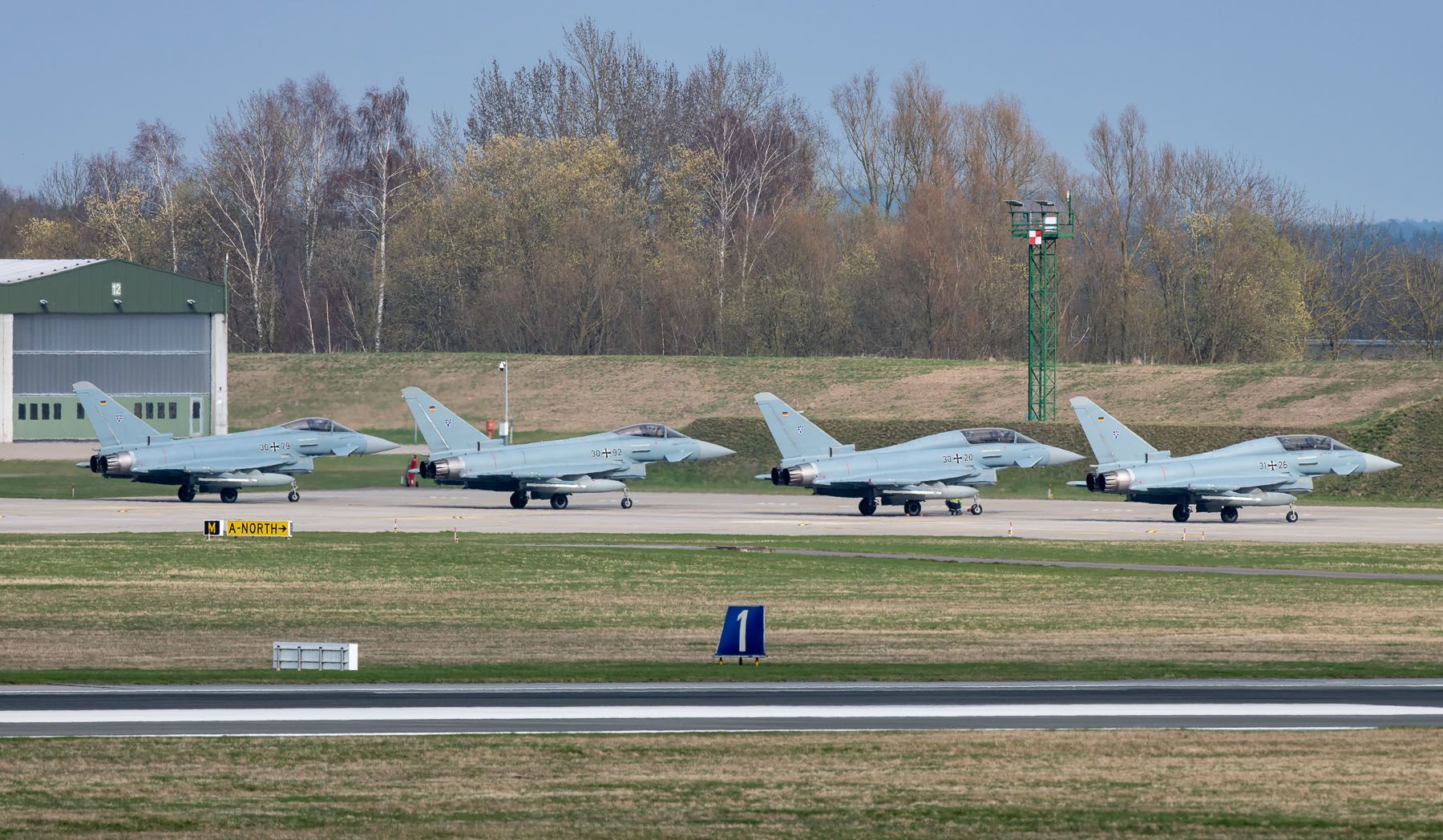
Germany’s planned Eurofighter acquisition numbers have varied significantly from the early beginning of the project. According the so-called Turin Agreement signed in August 1985, the four nations partnering in the European Fighter Aircraft (EFA) project aimed at a significant number of aircraft, and West Germany wanted no less than 250.
During the early 1990s and with the development phase well under way, Germany faced a new geopolitical reality. On 3 October 1990, the Bundesrepublik Deutschland and the Deutsche Demokratische Republik had reunited. This had quite some effect on the EFA programme, mostly because the reunification proved to be more than challenging financially. Also, the sentiment towards defence procurement had changed significantly following the end of the Cold War. EFA was an easy political target to cut costs.
In May 1992, Germany demanded a 40 percent cost reduction per unit, and its requirement for 250 aircraft was drastically downsized to only 140. Later that year, the whole programme was on the brink of collapse due to Germany’s unwillingness to continue its commitment. Defence Minister Volker Rühe proved to be a tough political opponent towards EFA and threatened to pull out of that Cold War relic programme, as he basically framed the new aircraft. However, a complete withdrawal would financially appear inefficient. Furthermore, lots of workplaces would go down the drain, a situation no politician wants to account for. Other solutions like acquiring another type or a simplified design turned out to be no real cost-effective alternatives, so the only realistic way left to cut costs would be acquiring lesser aircraft. Remarkably, against the odds, the downsized number of 140 was increased to 180 in January 1996.
More discussions and alternative suggestions between the partnering nations would follow, until all four finally signed a Production Investment Memorandum of Understanding on 22 December 1997. A month later, on 29 January 1998, this MoU was followed by the signing of a production contract (also known as Supplement 1) between Eurofighter GmbH (representing the four manufacturers for Eurofighter) and NETMA (NATO Eurofighter and Tornado Management Agency) representing the customers. A total of 620 Eurofighters would be built for the air forces of the United Kingdom, Germany, Italy and Spain. Although the German Federal Audit Office had suggested a production cutback to only 100 aircraft, the updated work-share agreement was still confirmed being 180 (including 33 dual-seat aircraft) for the Luftwaffe.
The total umbrella acquisition of 620 Eurofighters would be split into three different procurement tranches, each with their own contract and delivery schedule. Note that tranches solely refer to purchasing series, not to specific hardware or software standards. The building standard of a specific Eurofighter that leaves the assembly line at some point, plus all subsequent updates, upgrades and modifications determine its current capability. Nevertheless, there would be a significant difference in configuration between Tranche 1 and the rest.
Each participating nation produced a dedicated part of the aircraft, and in a complex but precise distribution system, these parts end up at the various four assembly lines that put the aircraft together for their respective customers. All Luftwaffe Eurofighters are assembled at Manching by EADS (that emerged from DASA), later called Cassidian, and thereafter Airbus.
The original planning regarding Germany in 1998 was for 44 Tranche 1 aircraft being delivered between 2002 and 2005; 68 Tranche 2 deliveries between early 2006 and early 2010; and 68 Tranche 3 aircraft to be delivered between 2010 and 2014. The planned production rate for 2002 was three aircraft, twelve in 2003, and 15 each year from 2004 onwards. Spoiler alert: this goal would not be met.
Tranche 1
On 21 September 1998, the Supplement 2 production order was signed between Eurofighter GmbH and NETMA, covering the first procurement tranche of 148 aircraft. Regarding the Luftwaffe, Tranche 1 would cover 44 aircraft of which 16 two-seaters. Tranche 1 was divided into three different batches (along with Batch 1 and Batch 2, the Instrumented Production Aircraft IPA3 was a batch on its own) and three Block production standards, being Block 1, 2 and 5. IPA3, serialled 98+03, was the very first assembled on the production line, fitted with test equipment. Like the partnering nation’s other four IPAs of the first batch, IPA3 represented the Initial Operating Capability (IOC) and joined the existing fleet of Development Aircraft for more testing and trials in April 2002.
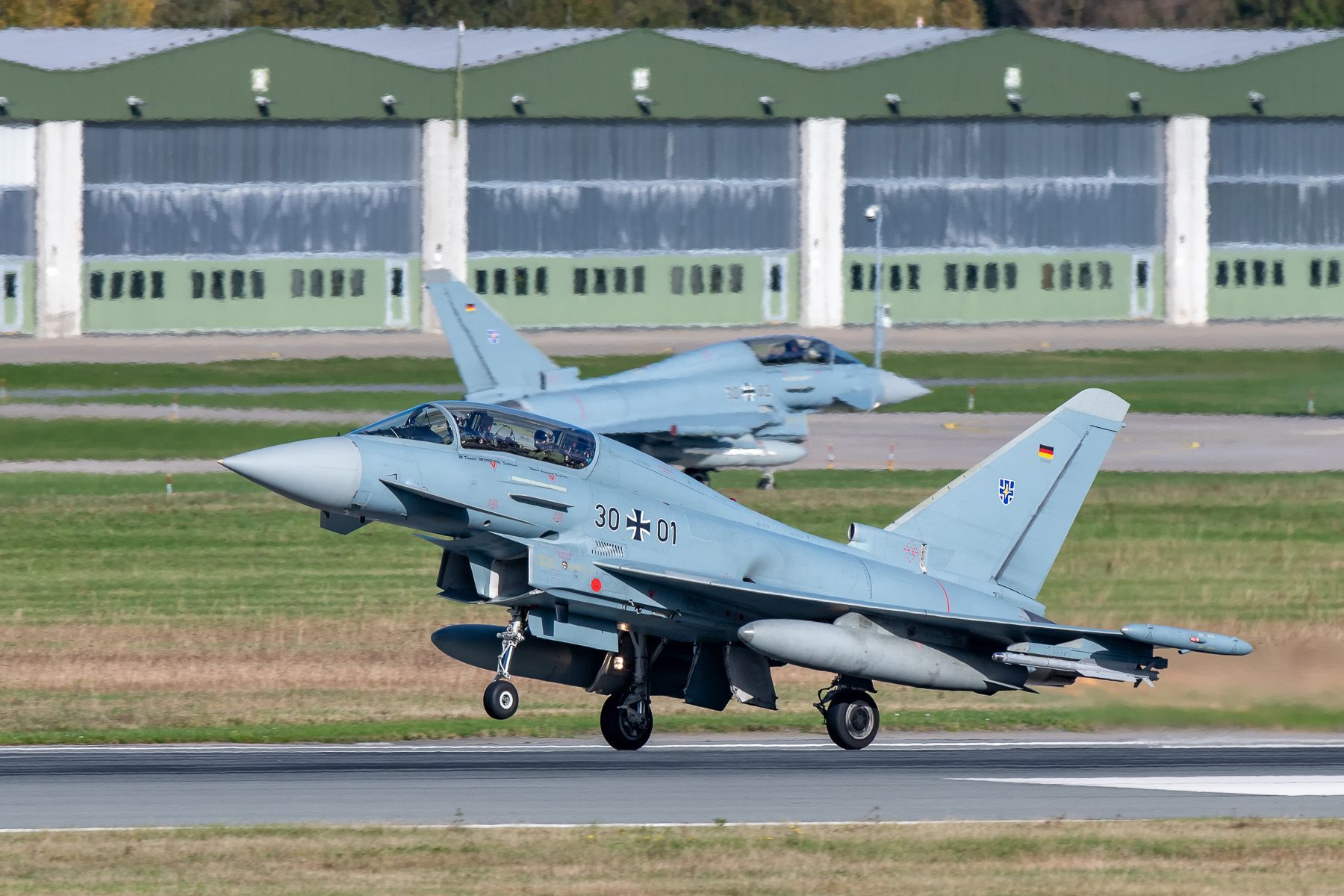
The first batch covered eight Block 1 dual-seat aircraft for the Luftwaffe with PSP1 standard avionics software to give them an Initial Operational Capability. This would provide a pilot conversion platform plus it enabled a basic air-to-air capacity. Aircraft GT0001 (serialled 98+31, later 30+01) would be the first operational production aircraft to fly, on 13 February 2003. On 30 June 2003, the Four Nation Type Acceptance was received. While GT0001 was handed over to the Technische Schule der Luftwaffe 1 at Kaufbeuren for ground instruction, other dual-seat GTs were delivered soon after, and initially remained stationed at Manching for crew training. On 30 April 2004, Jagdgeschwader 73 officially received the first batch of aircraft; now training from Laage could commence.
The first single-seat GS was handed over to the Luftwaffe on 14 February 2005. GS0002 (serialled 98+39, later 30+07) was part of the next series delivered in Batch 2, comprising Blocks 2 (13 single-seat GS plus one dual-seat GT), 2B (8 GS & 4 GT) and 5 (5 GS & 2 GT). Block 2 featured PSP2 full IOC standard software and a basic initial DASS system as well as AIM-9L Sidewinder and AIM-120B AMRAAM capability to enhance air-to-air capabilities, while Block 2B had the PSP4 software for full carefree handling characteristics in which the flight control system prevents airframe overload. Also, analog IRIS-T capability and full functions for the MIDS datalink system were now added.
Block 5 featured PSP5 Full Operational Capability (FOC) standard avionics software, featuring full DVI/O, full sensor fusion, improved GPS and full DASS functionality like automatic use of decoys and chaff/flare. It now possessed not only full air-to-air capabilities (including AIM-120C-5 integration), but became air-to-ground capable as well with radar operating modes expanded for air-to-ground operations such as ground mapping. However, the Luftwaffe apparently never used their Block 5 aircraft in this role. It also did not adopt the PIRATE infrared system, another Block 5 feature that was unlocked. The first Block 5 aircraft (the Spanish SS0011) took off from Getafe on 21 December 2006, and Eurofighter received international approval for Block 5 from NETMA soon after.
The last Block 5 Eurofighter, GT0015 (30+42) was handed over to the Luftwaffe on 26 March 2008. In order to bring all aircraft to mostly the same configuration standard, the R2 upgrade programme was launched on 15 November 2006, in which Block 1 and 2/2B aircraft became level with Block 5, although all dual-seat Eurofighters delivered under Tranche 1 would still lack the full DASS. The Block 5 configuration would be the ultimate standard for Eurofighters delivered under Tranche 1. A number of aircraft would even be upgraded before actually being delivered.
The R2 upgrade was carried out by the Eurofighter Kooperation Zelle at Manching. This EKZ is a joint venture between the Bundeswehr and Airbus, responsible for interval inspections and upgrades. Although it was initially projected by the industry that a conversion would only take six to eight weeks, eventually it would cover some nine months on average. Because several airframes were now out of service for a lengthly period, the availability of operational aircraft was very low, especially hampering operations with JG 74 at Neuburg.
Redelivery of R2-modified was mostly completed by 2012; the last three upgrades took a bit more time, as these had temporarily served as ground instructional airframe at the air force’s technical school at Kaufbeuren. This trio also needed a full 400hr inspection.
Tranche 1 enabled Jagdgeschwaders 73 at Laage and 74 at Neuburg to retire their F-4F Phantoms and re-equip with the new fighters. JG 73 would primarily be the Luftwaffe’s Eurofighter conversion unit, while JG 74 continued its air defence task, including quick reaction alert (QRA) duty.
Eventually, the Luftwaffe would only operate 33 out of 44 ordered in Tranche 1, due to the Austrian Eurofighter procurement messing things up. The German neighbours initially ordered 18 aircraft in Tranche 2, but this was altered on 26 June 2007 into 15 Tranche 1/Block 5 single-seat aircraft. Six Tranche 1 production slots (of which two destined for Germany) had already been reallocated, meaning that GS0022 and GS0023 were stricken from the list. To compensate, Germany would now receive two more aircraft in Tranche 2. With their order renegotiated, Austria would now receive nine from Luftwaffe stocks. Six Block 2B did actually serve in Germany, and with not more than 100-200 hours logged so far, underwent a complete overhaul & R2 upgrade (paid by Austria) after being delivered as Block 5 to Austria, albeit without DASS (for example, 30+19 and 30+21 had their rear missile approach warning sensors removed). The remaining three actually went straight from the factory to the new customer and thus were never operated by the Luftwaffe, although during the flight test programme they actually wore their allocated German serials.
Tranche 1 deliveries concluded on 17 December 2007 with the delivery of Block 5s 30+32 and 30+33 to Neuburg.
The Block 5 aircraft had FPSP3 software (at least in 2011) that featured an initial air-to-ground capability, albeit apparently without the support for GPS-guided weapons nor laser designator pods, so the value was actually extremely limited.
During July 2012, hardware improvements for SRP 4.3 were carried out at Nörvenich on a Block 5 aircraft. The Tranche 1 aircraft hardware was now stepwise upgraded. For example, the new Interface Unit now resembled those of Tranche 2 aircraft. The MIDS were also upgraded in view of both hardware and software. GPS was not updated (Block 5 aircraft lack the GPS antenna located on top just aft of the canopy).
Being Block 5, the Tranche 1 aircraft had reached the final level of feasible upgrades. The built-in hardware basically precludes further updates. Replacing all computers, processors, cables etcetera may technically be possible as was evaluated in the Enhanced Tranche 1 Study, but the retrofit, testing and certification process would take such a tremendous budget and effort for an airframe that has already seen service for some time, that this idea was abandoned.
With the Quadriga or Tranche 4 procurement for extra Eurofighters, the fate for the original Tranche 1 airframes was sealed as 33 of this order were meant as a one-on-one replacement. Between 2014 and 2024, eight of these older aircraft had already been taken out of active flying duty, ending up as either ground instructional aircraft or being used as weapons load trainer with some high-value parts being reused. These included 30+39 which service life was affected by many flight displays and some hard landings. It is now on display in Berlin-Gatow. The aircraft put aside until 2024 had logged no more than 1,600 flying hours.
With delivery of the new Tranche 4 aircraft imminent, more remaining Block 5s are gradually taken out of service, starting with 30+02 in 2025. Also 30+01, the Grand Old Lady, was retired, making her last flight on 3 July 2026. The last one is now planned to retire in 2028.
In October 2022, Austria’s Defence minister Klaudia Tanner (ÖVP) promised more budget for the army following the Russian invasion into Ukraine. One of her plans was to acquire three secondhand Eurofighters (GT) from the Luftwaffe. This should enable to reduce expensive training hours in Germany and Italy. However, following this announcement, it has been quiet ever since on this subject.
Tranche 2
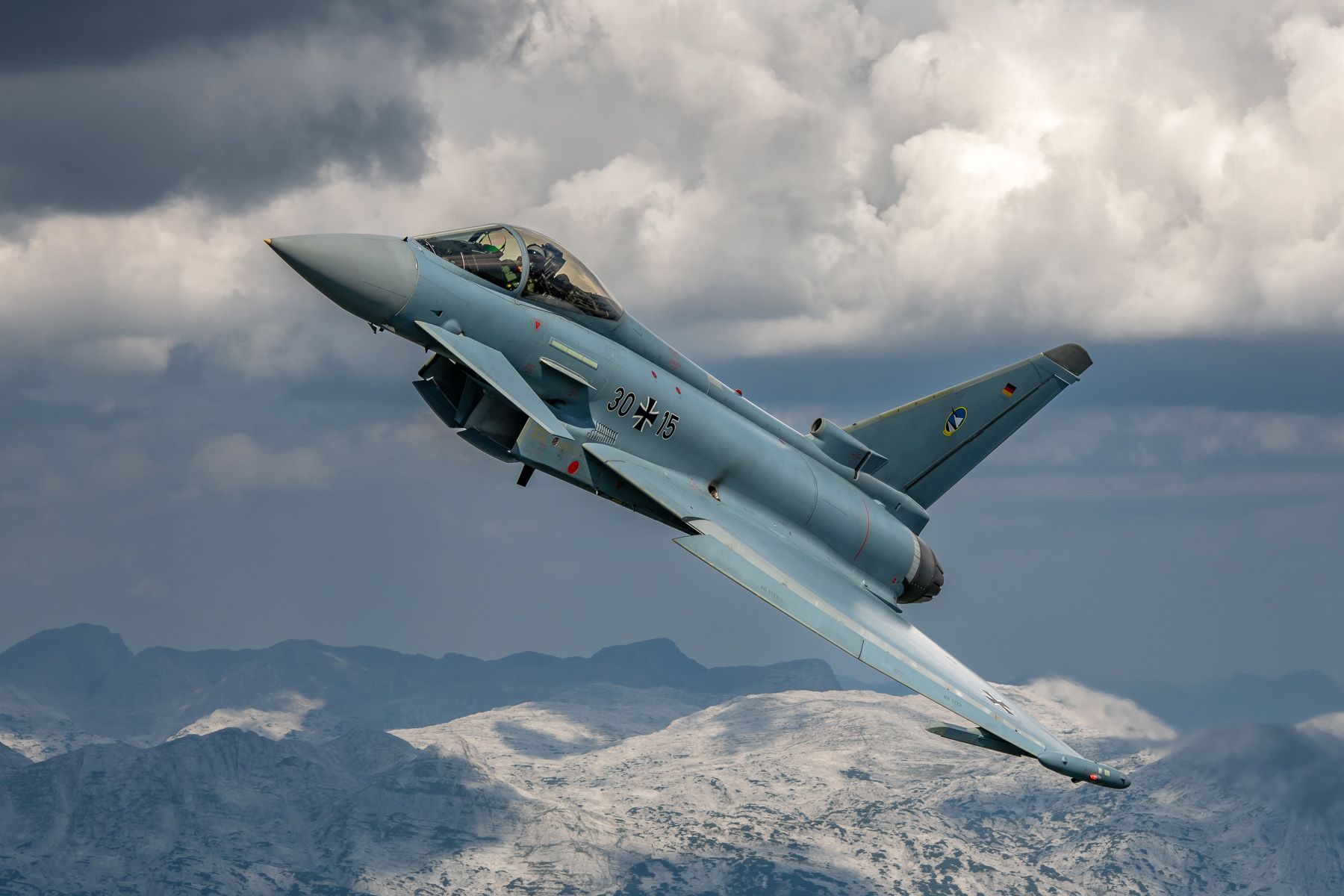
The Supplement 3 production order covering 236 aircraft for Tranche 2 was signed on 14 December 2004. Germany signed up for 70 aircraft (including 10 two-seat GT versions). This number included the two compensating for the cancelled GS0022 and GS0023 that were redirected in view of the Austrian order. Additionally, Germany received nine extra aircraft under Tranche 2 to replace those that went south from Luftwaffe stocks. These substitutions were among the first to be delivered under Tranche 2. Featuring ‘Austrian’ factory serials (AS0007 till AS0015), their allocated serial numbers 31+14 till 31+22 would form a serial block at the end of Tranche 2, since the original serial batch running from 30+44 to 31+13 had already been allocated. So in total, Germany received 79 aircraft under Tranche 2.
This procurement series was split in two separate batches. Batch 3 would kick off with Block 8, having hardware improvements such as improved DASS, MIDS, IFF, new mission computer and radios. Initially these aircraft were operating with the same PSP5 FOC avionics software run on Block 5. To make it even more complicated: the standard software version for Block 8 was SRP4.1, while for Block 8B, SRP4.3 should become available. The P1E enhancement upgrade would then feature SRP5.0 and add additional weapons. Type acceptance for Block 8 was initially foreseen for April 2008.
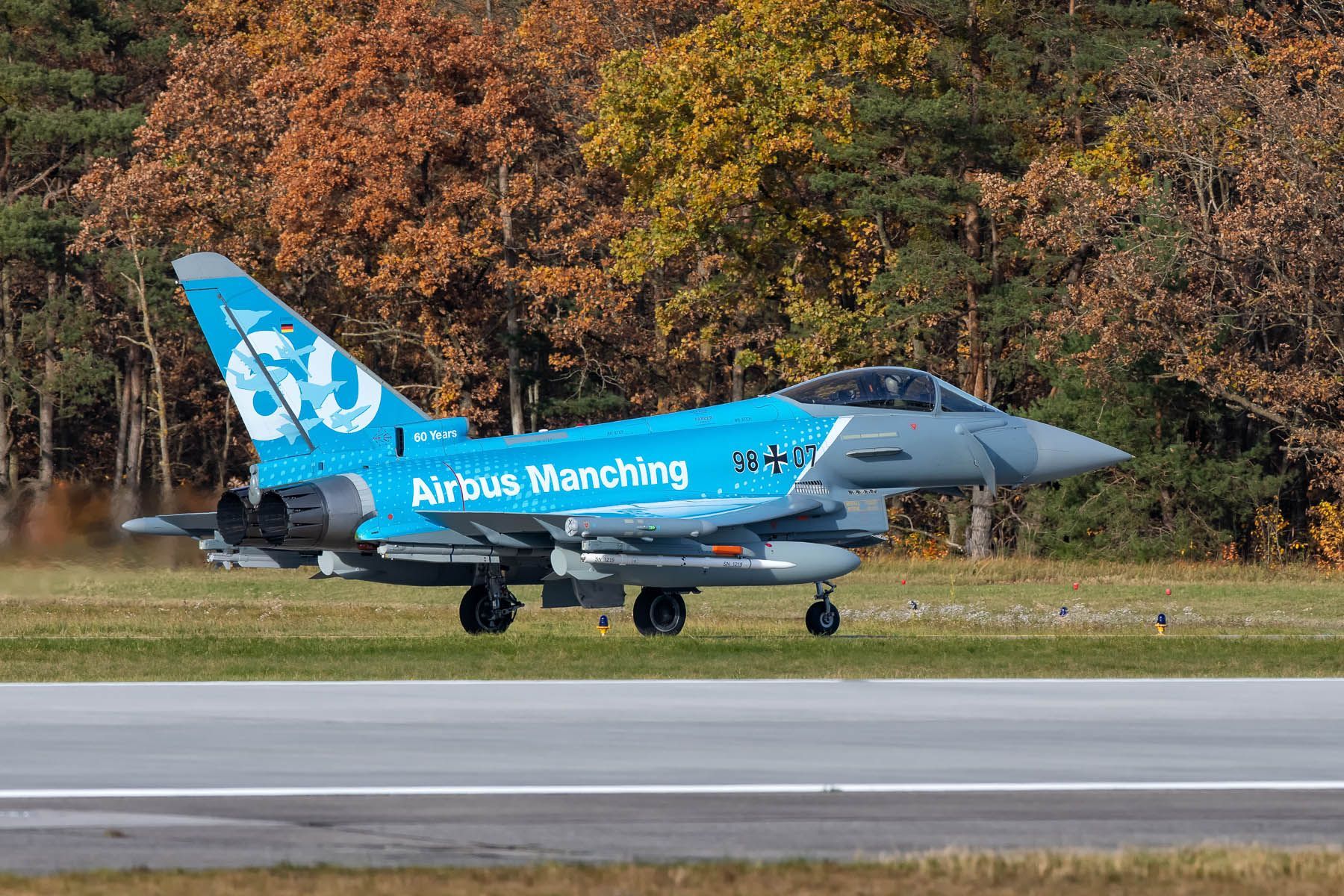
The first Tranche 2 Block 8 aircraft, IPA7 (allocated 30+44 but serialled 98+07) flew first on 16 January 2008, piloted by EADS test pilot Chris Worning. It started its test career on 1 February 2008 when the aircraft was officially handed over. The first task for IPA7 was to accomplish Type Acceptance for Block 8 in April 2008. To accomplish this goal, both IPA6 (converted with Block 8 avionics as of 1 November 2007) at Warton and IPA2 (fitted with Improved EJ200 engines for testing) in Italy were used to assist. In September 2008, NETMA released the international approval for Block 8, allowing deliveries to the customers. It was also announced by Eurofighter that the duals delivered under Tranche 2 were structurally improved to enable these to carry heavier weapons. By the way, following the Block 8 acceptance programme, IPA7 became involved in integrating Paveway IV for RAF’s Typhoons. On 17 June 2009 98+07 flew with six Paveway IVs.
Next in line was Block 9 with GT0016 (30+54) and GS0049 (30+66) being the first and second aircraft of this standard.
Batch 4 covered Blocks 10, 11 and 15, which had additional capabilities unlocked such as IRIS-T digital, AIM-120C-5 AMRAAM and improved DASS functionality. Block 10 would use EOC 1 software from the start while EOC 2 was foreseen for Block 15.
Tranche 2 deliveries to the Luftwaffe commenced on 8 January 2009, involving AS0008/31+15 that went to Neuburg. The nine AS-aircraft were delivered without the full DASS since these aircraft were supposed to be destined for Austria. The system was built in at a later stage, however AS0007/0009 (31+14/16) would not receive the rear missile warning receiver. Initially expanding the fleets of both JG 73 and 74, Jagdbombergeschwader 31 started Eurofighter operations from Nörvenich as of late 2010, trading in their Tornado IDS fighter-bombers.
By 2014, an agreement was made between the Bundeswehr and the industry in view of some production issues related to the lack of de-burring that apparently had affected some airframes. The last two aircraft were delayed because of this, however these were finally handed over in May 2015.
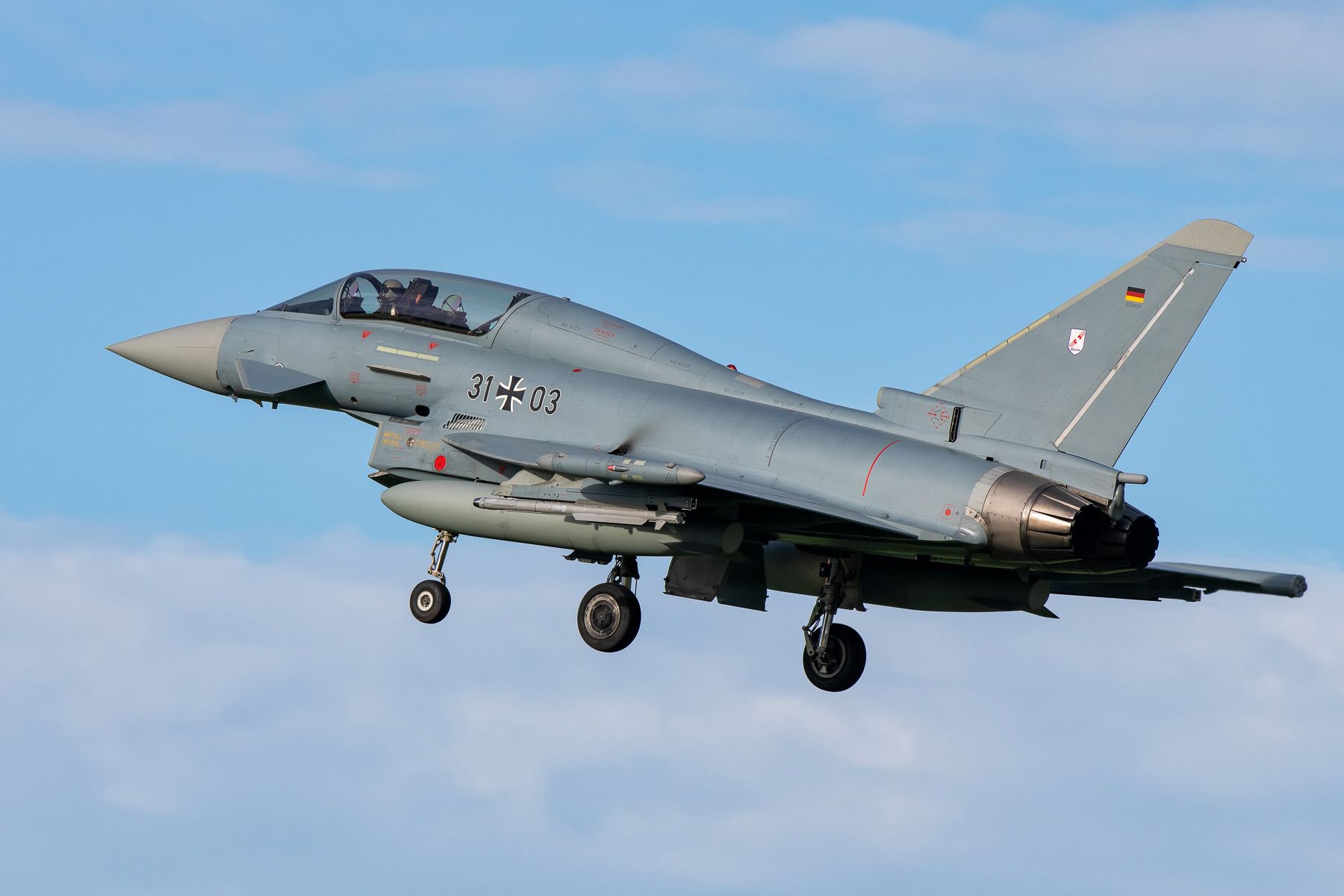
Oddly, the last Tranche 2 delivery to an operational unit did not take place until 22 February 2024, when two-seat 31+03 joined the Taktisches Luftwaffengeschwader 31. Although flown first on 17 April 2013, this aircraft stayed at Manching for various trials for over a decade. Upon arrival at Nörvenich, it had logged less than ten flying hours.
In the end, Tranche 2 would all get to Block 15 standard , with Phase Enhancement upgrade programme P1E being designed as a retrofit. From Block 11, aircraft had the hardware to accommodate the software related to P1Ea, and P1Eb was built further on that.
By June 2024, the Tranche 2 and Tranche 3A aircraft of the Luftwaffe had mostly the same standard, being either P1Eb or P2Eb (as at that stage, not all airframe had yet been upgraded to P2Eb). P2Eb upgrades came either from P1Eb or P2Ea, with the note that it takes more effort to upgrade from P1Eb than from P2Ea.
Three aircraft delivered in Tranche 2 are no longer in service. GS0070/30+91 was involved in a mid-air collision over Olsberg on 23 June 2014 during an interception exercise, sadly killing the two-man crew of a Lear Jet. The Eurofighter pilot managed to make a successful single-engine emergency landing at Nörvenich, and in May 2015 30+91 was transported by road to Manching for repair assessment. Eventually it was decided not to return it to flying status. Instead, it is reportedly used as ‘Bodenerprobungsträger’ at Manching since 2023, and eventually it might possibly end up in Kaufbeuren for ground instructional purposes.
On 24 June 2019, another mid-air collision occurred, this time between GS0033/30+48 and GS0039/30+55 of the TaktLwG 73. Together with a third one, the trio took off from Laage for a conversion training sortie. During the exercise, the pilot of 30+55 hit his colleague’s aircraft. Tragically, he was killed in the crash, while the other pilot could eject and parachute to safety.
Phase 1 Enhancement
From the start, Eurofighter was designed according the building block approach. This means that during its service life, new options such as systems, weapons and capabilities would be developed and added along the way. To realise this, so-called phase enhancement upgrades were created. This would allow existing aircraft to be retrofitted with new options, if not already incorporated at the assembly line.
On 30 March 2007, the Phase 1 Enhancement contract was agreed with NETMA. This P1E programme was aimed to provide a swing-role capacity for Eurofighter delivered from Tranche 2 onwards, meaning air-to-air and air-to-ground roles could be conducted in parallel. This was achieved by better air-ground display formats including the helmet sight system, and the possibility to continue to attack a ground target while engaged in an air-to-air battle. Other features included 8.33kHz spacing radios, improvements of the DASS (larger frequency coverage and recision), MIDS (improved communication with coalition forces) and GPS, IFF Mode 5, expanded DVI, digital integration of IRIS-T, full integration of the Litening III targeting system and integration of the EGBU-16 Paveway II (later called GBU-48). For the latter, the inboard wing pylons were cleared for use. The P1E upgrade is also known as Change Proposal 210 (CP210).
The IOC for P1E was planned for 2011 and FOC one year later. However, the flight tests that started in 2009 and carried out by IPA4 from Getafe, Spain and IPA7 from Manching were not completed before October 2013. Meanwhile, the whole programme had been split into two separate upgrades, called P1Ea and P1Eb. It must be noted that initially P1Eb only covered British and Saudi aircraft. Germany implemented the software at a later stage, as it particularly covered the integration of the GBU-48 guided bombs and Litening pods.
Although the contract was already signed early 2007, it would take until late 2014 for the full upgrade to finally reach the frontline units. Before delivery, aircraft from Block 11 onwards had the hardware installed to accommodate P1Ea software. The rest was upgraded at a later stage. The Luftwaffe took P1Ea as an inline fit for their new Tranche 3 aircraft while still on the production line. P1Ea was then quickly superseded by the more refined P1Eb.
Tranche 3A
From the very start, Tranche 3 was foreseen to have an air-to-ground capability. It should also be equipped with electronically scanned active array radar, but this development would face so much delay, that this did not happen.
Already in June 2006, there was discussion on the size of Tranche 3. In response to the German political party SPD that questioned the foreseen order worth around €2.5 billion, Defence Minister Franz Josef Jung (CDU) replied that instead of the then current amount of 260 Tornados and 60 Phantoms, the Bundeswehr would have 80 Tornados and 180 Eurofighters eventually. Furthermore he stated that contractual obligations were in place, and that the sale of surplus Eurofighters to other nations was no option.
In this final procurement batch under the original 180-aircraft umbrella contract, the Luftwaffe would receive 68 aircraft including 7 GT two-seaters. However, negotiations for Tranche 3 proved to be difficult and lengthly from the start in 2008. A year before, the first signs appeared to reduce Tranche 3 as both the UK and Italy approached Eurofighter GmbH to check that possibility. Options that were put on the table were reduction, take delivery of aircraft to subsequently sell these to third parties, or even total cancellation. Along with Italy, Germany considered to acquire less aircraft than planned. In April 2008, SPD defence politician Hans-Peter Bartels presented a position paper that included a large reduction: only half of the 68 Tranche 3 aircraft should be acquired according to him. No idea if this paper was the cause, but in an attempt to break the deadlock in negotiations, the German MoD suggested in July 2008 to split up Tranche 3 in subparts. Eurofighter GmbH would soon support this idea. Despite the ripples, the German Ministry of Defence (by word of Defence Minister Franz Josef Jung) still expressed their intention to buy all 180 aircraft as planned by November 2008, since according to him it would make more sense to take the aircraft rather than to pay for compensations. He aimed to have a deal along with the other nations by Spring 2009.
Nevertheless, to buy time for the customers as well as to assure that production continued without a gap, it was indeed suggested to split procurement into two separate parts. Laid down in Supplements 4A and 4B production orders, there would now be a Tranche 3A to allow continuation, and 3B to be defined at a later stage. In March 2009, Jung confirmed this option for the first time, mentioning an initial possible order for 31 aircraft under Tranche 3A, but also stressing that 3B was definitely not off the table. (Later that year, on 30 October, Germany’s new ruling coalition actually decided against a follow-up Tranche 3B).
In June 2009, the German Bundestag allowed for further Eurofighter procurement under Tranche 3A for 31 aircraft worth €2.8 billion. The follow-up order for Tranche 3B was postponed until May 2012. On 31 July 2009 the four partner nations finally signed the contract for Tranche 3A. The whole procurement comprised 112 aircraft in an order worth €9 billion. Deliveries were planned between 2014 and 2018.
Although still unavailable, both the Luftwaffe and the Royal Air Force wanted the AESA radar for their Tranche 3A aircraft with Captor-M radar used as some kind of stopgap. An official press release by Eurofighter GmbH issued on 20 July 2010 revealed that the new AESA radars would become available from 2015 (which did not happen), and that the new aircraft would initially focus on additional air-to-air capabilities like the integration of Meteor (which only happened with the P2Eb upgrade from 2021), with additional air-to-ground weapons added thereafter, including Brimstone and Taurus (which was even more delayed). What did materialise were new buses, computers and modifications to the generators and climate control. The previously announced provisions for conformal fuel tanks (CFTs) for Tranche 3A were cancelled.
On 25 October 2011, the German Defence Ministry announced a possible reduction from 180 to 143 Eurofighters, or with other words the cancellation for a Tranche 3B order. This would mean that Jagdbombergeschwader 33 would not transfer to the new aircraft as planned before. Still, the EADS personnel organisation, which saw an Indian order definitely fall through in January 2012, grabbed the opportunity and pushed the Luftwaffe towards selling their older jets and thus to secure the much-wanted Tranche 3B order. To no avail. As the Minister of Defence saw no future export chances for Eurofighter including a sale of Tranche 1 aircraft, he pressed on to cancel Tranche 3B as announced before.
Then in 2013, in the Bundeswehrreform report, it was officially announced that the Luftwaffe would operate only 140 Eurofighters, beside the three IPA aircraft. This was the final nail to Tranche 3B’s coffin. With Tranche 3A aircraft deliveries planned to commence early 2014, the production rate would be reduced with the intention to keep the facility open for a longer period.
The aircraft were built in two different standards. Block 20 featured PSC 10.XX.20 software while Block 25 came with PSC 10.XX.40. As part of the P1Eb upgrade, the software was later updated to PSC 12.
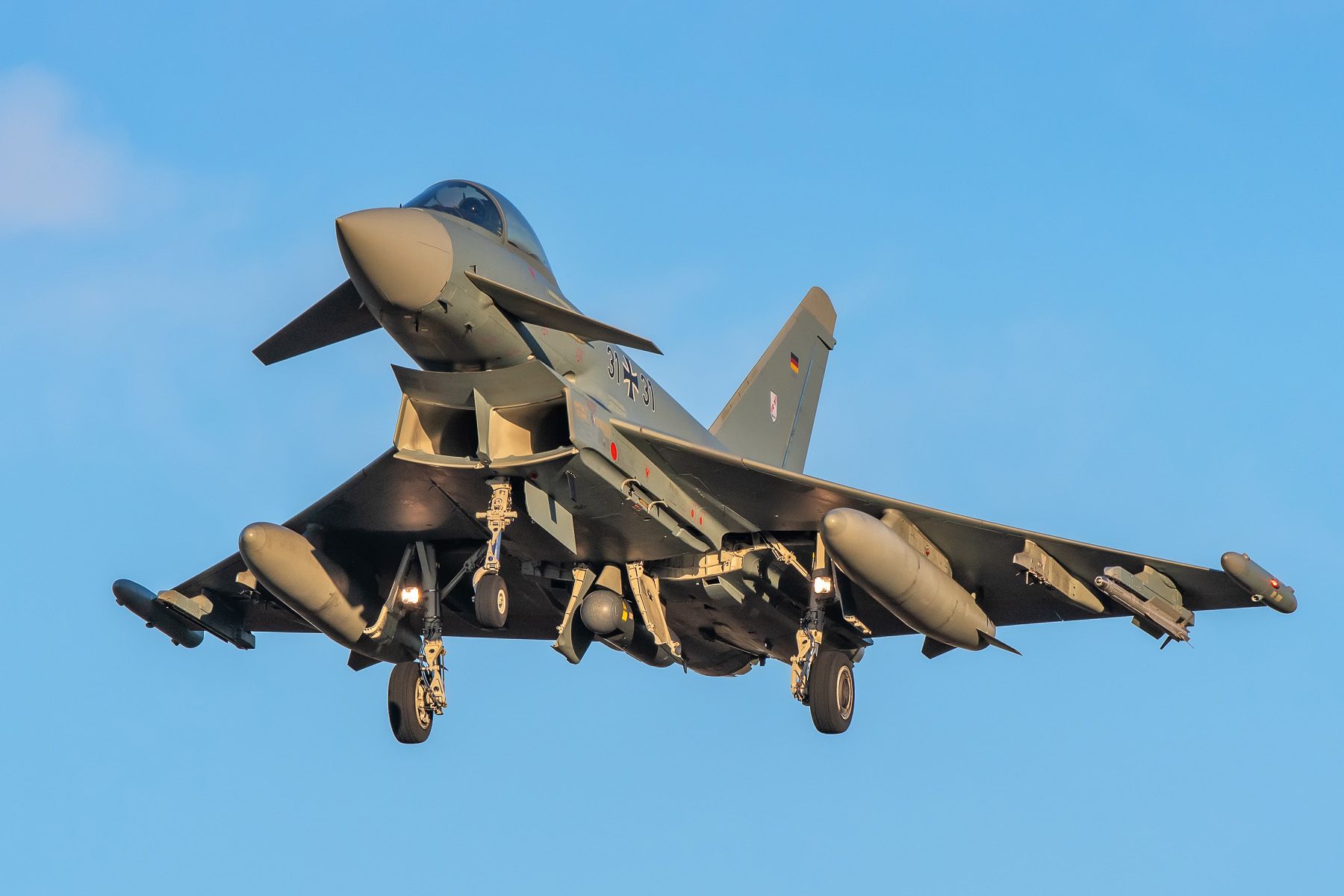
The first Tranche 3A aircraft to fly was GS0089/31+29. There was a bit of delay encountered with the type certification of Block 20, mainly due to issues with resources. When this was resolved, the first pair was handed over to the TaktLwG 31 in September 2015. While the last Block 20 aircraft were delivered by autumn 2016, type acceptance for Block 25 was issued in November 2016, covering aircraft from GS0101/31+41 onwards, as well as five dual-seat aircraft GT0027/31+24 till GS0031/31+28. In 2017, weaknesses in the verification of the new Front Computer were disclosed, delaying deliveries of Block 25. The final Tranche 3A aircraft, GS0113/31+53, was handed over to the Luftwaffe on 11 December 2019 and delivered to Nörvenich six days later.
Also part of Tranche 3A is IPA8, like all other IPAs a series production standard aircraft with extra equipment and instrumentation for system tests. GT0026 is allocated serial 31+23, but carries registration 98+08. Its first flight from Manching was on 12 September 2016. IPA8 was destined to be the E-Scan radar testbed, and on 13 March 2018 it made its first flight with the new radar. IPA8 is operated by Airbus.
Phase 2 Enhancement
A next round of upgrades was laid down in the Phase 2 Enhancement upgrade programme. The first mention of P2E was in 2009. In 2013, NETMA ordered Evolution Package 2 from Eurofighter GmbH that eventually should lead to P2E. At that stage, the contents were just basically filled in and covered modifications to the radar, DASS as well as extra MIDS features. Furthermore flight control improvements were foreseen. Weapon options focused on the Meteor air-to-air missile, the Brimstone air-to-ground missile (eventually postponed to P3E) and the Taurus KEPD 350 air-launched cruise missile (now planned as part of P4E).
In January 2016, the Vorläufige Verkehrszulassung (VVZ – provisional approval) was issued for IPA7 in preparation of the further development of P2E, and modified as such it made the first flight on 4 March 2016.
Coming in different versions, Germany focused on P2Eb. Hardware modifications allow AMRAAM and Meteor to be carried on the same stations. P2Eb also gives better protection against ground-based radar-guided threats, guided air-to-air missiles and enemy electronic warfare systems. Radar threats can be detected earlier, and subsequently, counter measures can be done more efficiently. Also DASS is again upgraded, with redesigned decoys now offering a more efficient protection against the enemy’s weapon potential. Furthermore, improved cockpit displays make system operation more intuitive, and a better test and diagnose capability for the maintenance computer (Maintenance Data Panel) recognises system failures more quickly, thus shorten repair intervals and therefore improve in-service times.
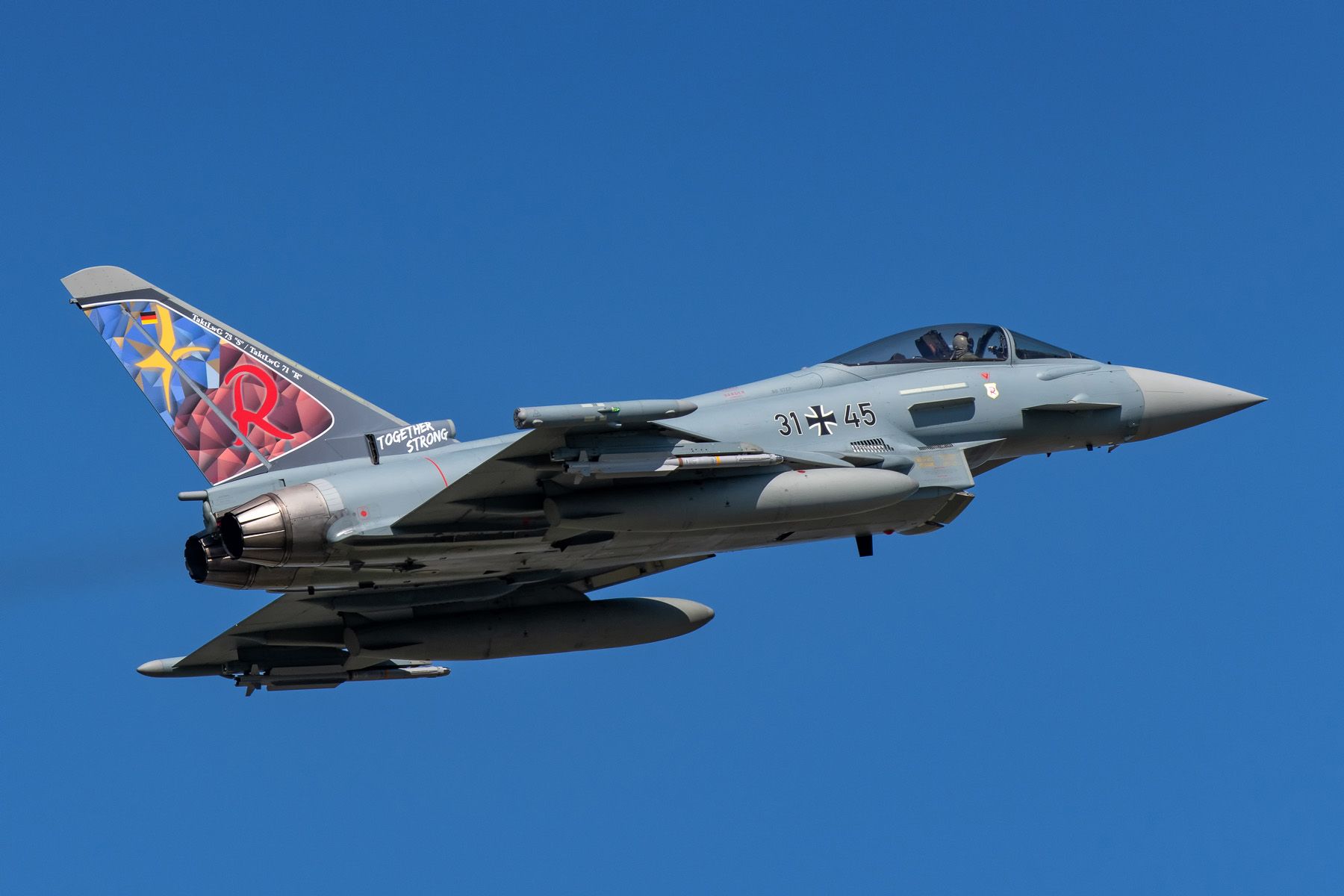
The first operational P2Eb-modified aircraft (31+35) flew from Neuburg on 14 April 2021. Five more upgraded aircraft joined a test and evaluation phase. This programme lasted until July 2021 whereafter these and meanwhile other modified aircraft joined several international exercises. By the end of 2021, 13 aircraft had been modified to P2Eb.
By June 2024, the aircraft delivered in Tranche 2 and Tranche 3A had mostly the same standard, being either P1Eb or P2Eb.
Phase 3 Enhancement
While P2E’s specifications still had to be fully established, this did not prevent the four partner nations to sign a €200 million contract on 16 March 2015 with the Eurofighter consortium for the next P3E round of modifications.
P3E was later split in various levels and sublevels. With Kuwait as a new customer, P3Eb was introduced while P3E was renamed P3Ea by the British. P3Ea now effectively became an RAF-only upgrade, and to make it even more complex, P3Eb was also split in two. P3Eb1 was adopted for Kuwait while the four partner nations would now work on P3Eb2 (with P3Ea as a basis). For Germany, the integration of Brimstone is relevant. As of March 2021, IPA7 is modified to P3Eb2 standard to enable Brimstone trials. Then at some point, around 2023, P3Eb2 was apparently redesignated P3Ec1 and incorporates elements that were originally planned for P4E, including communication enhancements for MIDS and radios, and installing of IFF Level 2 Mode 5. The Tranche 4 aircraft (see below) will have the P3Ec1 package fresh from the factory.
Tranche 4
The first mention of Tranche 4 can be traced back to January 2017, when plans were revealed to replace the older Tranche 1/Block 5 aircraft with a new batch of Eurofighters.
During September 2018, an upcoming order to replace the Tranche 1 aircraft was mentioned, with a decision to be taken soon. Then on 1 February 2019, the Bundeswehr announced the requirement for 33 new aircraft as a one-on-one Tranche 1 replacement, and in August 2019, NETMA asked Eurofighter GmbH and Eurojet to come with a proposal offer. Project Quadriga, as the project was now dubbed, initially totalled 26 single-seat GS aircraft and seven dual-seat GTs, all to be equipped with the new ECRS Mk1 radar. Airbus expected that the option for five more aircraft would be confirmed by the BAAINBw in 2020.
Fun fact: the name Quadriga originated from the original plan to deliver four aircraft under Tranche 4 with P4E in 2024. This was a bit optimistic, however.
On 4 November 2020, the ‘Verteidigungsausschuss des Bundestages’ approved the €5.5 billion deal for 38 Tranche 4 Eurofighters - comprising 30 GS and 8 GT duals - thereby confirming the option for five additional aircraft. Also, the exact breakdown was explained: 33 would be one-on-one Tranche 1 replacements (including IPA10 for IPA3); two would be replacements for the two aircraft lost in a mid-air collision in 2019; while three more were added to become Instrumented Series Production Aircraft (ISPA) for test and development purposes. The deal was signed one week later, on 11 November 2020. Deliveries were planned between 2025 and 2030, extending Eurofighter service well beyond 2050.
On 13 June 2023, parts were put together at Manching, highlighting the start of the final assembly of the first Tranche 4 aircraft. At that stage it was still foreseen to deliver Tranche 4 from the factory with ECRS Mk1 radars from 2025.
In the 18. Rüstungsbericht (18th Armament Report) published in February 2024 by the Ministry of Defence, it was nevertheless mentioned that problems with software development and certification associated with the radar forced a delay of some 19 months, from 2024 to 2026. This forced first deliveries to be postponed beyond 2025. The first flight for a Tranche 4 aircraft is now foreseen to take place not before late June 2026.
The first public appearance of a Tranche 4 happened during the Airbus Defence Summit on 20 May 2026 at Manching when GS0115 (34+03) was reveiled. Apart from the ECRS Mk 1 Step 0 radar (see more on this in the systems section), it features new hard- and software, but more significant improvements are expected to be incorporated later under the LTE (Long-Term Evolution) programme that amongst other handles the aircraft’s avionics architecture. The Large Area Display shall then replace the previous three 6x6 inch multi-function head-down displays. Other features could include new flight control and mission computers, communication equipment and armament control systems, however Germany has yet to decide which options it will choose.
Then on 14 July 2026, Airbus test pilot Stefan Auer took the first Tranche 4 from its maiden flight from Manching. According Auer, the Production Flight Acceptance Test (PFAT) of GS0114 (34+02) occurred flawlessly.
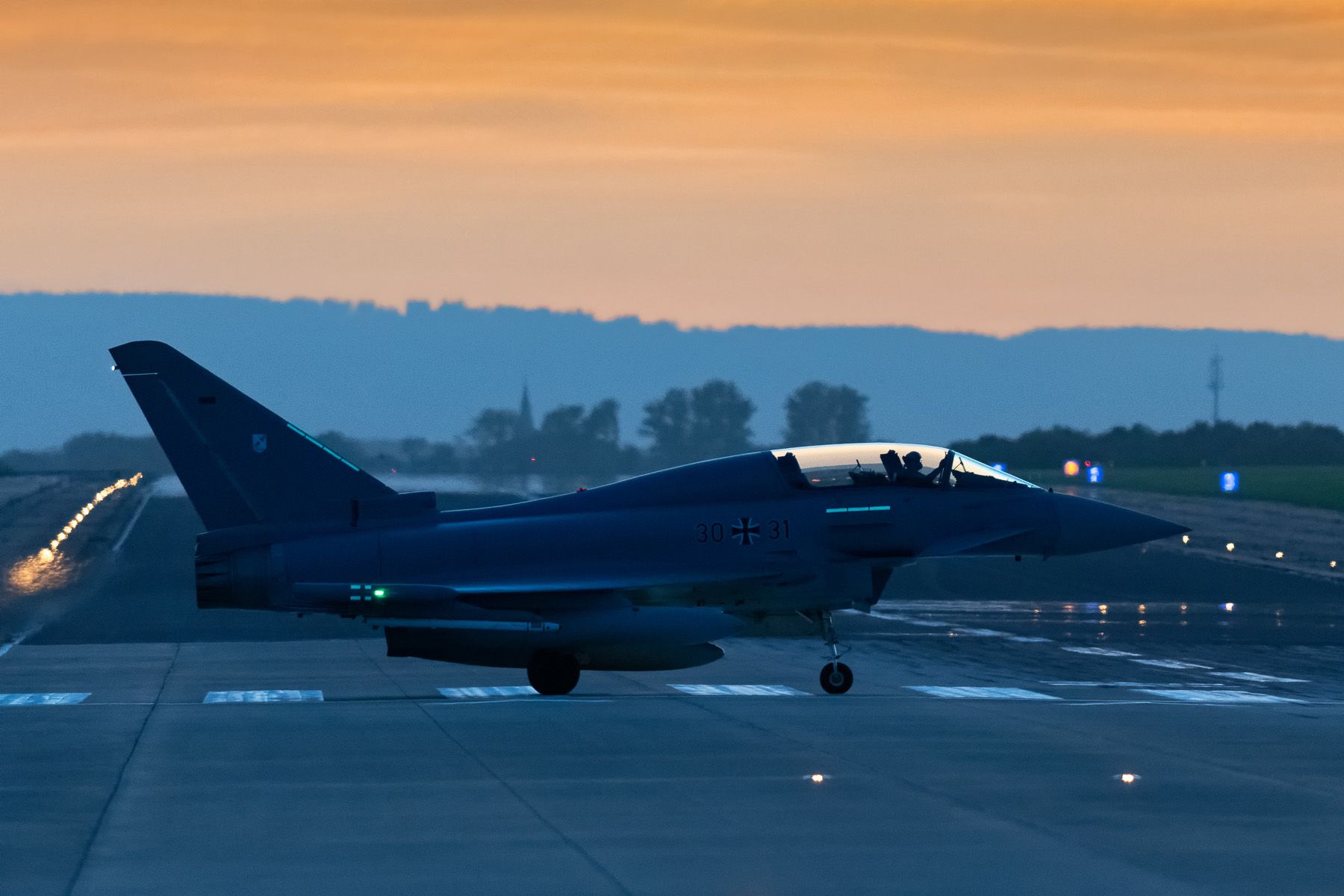
Elektronischer Kampf (EF EK)
On 27 February 2022, German Chancellor Olaf Scholz declared that Eurofighter would be fitted for Electronic Warfare. The budget was to come from the Sondervermögen Bundeswehr.
The first concrete steps towards the Eurofighter being used as such were noted in October 2022. Sensorhaus Hensoldt and Rafael Advanced Defence Systems (ADS) started an exclusive cooperation, in which the electronic attack technology KALÆTRON Attack would be improved by Hensoldt. The new EA pod was designed to use the existing Litening pod interfaces, which was useful since the Luftwaffe already uses Rafael’s Litening and Reccelite systems.
Beside the Hensoldt/Rafael combo, there are talks with five other companies to deliver the jamming equipment, being ESG/Elbit (TEASE); Saab (Arexis); IAI (Scorpius-SP); Thales (CARBONE); and Raytheon and/or Northrop-Grumman. On 13 June 2023, the BAAINBw announced they had selected Saab (in cooperation with Helsing) to equip the EF EK with the Arexis IEWS (Integrated Electronic Warfare System) for the SEAD role by 2030. The P4E upgrade will incorporate integration of the EK systems into Eurofighter.
On 28 November 2023, the Haushaltsausschuss des Deutschen Bundetages (budget committee of the German Parliament) secured the financial funds for the conversion of 15 aircraft. The EF EK Step 1 contract (Systems Definition Phase) was signed one day later, on 29 November 2023, worth €25 million. The initial contract with Saab was signed on 12 December 2023.
More signing took place in November 2025 to continue the development. A contract worth €291 million covers the continuation of the earlier agreement in view of the integration of the Arexis Electronic Warfare sensor suite for the EF EK and should be completed by 2028. Another deal for €258 million handles artificial intelligence technology (named Cirra) to be developed by both Saab and partner Helsing. This AI will improve the function of the system’s emitter locator, located in the wing tip pods and designed to identify and track enemy radar systems. These can then be attacked with the Northrop-Grumman AGM-88E2 AARGM (Anti-Radiation Guided Missile). Cirra will also analyse radar data and take measures for self defence. This will more or less replace the Weapon Systems Operator (WSO) as EF EK will be a single seat variant.
In July 2026, Saab delivered the first Arexis hardware prototype to Airbus Defence and Space. This will subsequently be prepared to fit into a Eurofighter. A live flight campaign with the new system installed was expected to begin in 2028. In parallel with the installation work for the prototype hardware, Airbus is working with the customer to prepare the certification procedures for the AI-related hardware and software.
Following the Initial Operational Capability fo EF EK, the second step would be integration of jamming pods in P5E (2030) and P6E (2032). The plan to increase the initial number of 15 became real with the Tranche 5 order placed in 2025. These will all be delivered as EF EK between 2031 and 2034. The EF EK will enter service with the Taktisches Luftwaffengeschwader 51, the dedicated electronic warfare and surveillance wing of the Luftwaffe.
Phase 4 Enhancement
On 5 June 2024 a contract was signed between Eurofighter GmbH and NETMA for the P4E(SD) (System Development) package. This will see a number of new developments, including an automated sensor management capability for all radar systems, allowing ECRS to complete multiple simultaneous tasks while reducing the pilot workload. The package will also include an improved cockpit interface and enhanced Radio Frequency Interoperability (RFIO) that improves survivability and lethality, as well as more DASS upgrades. An Aerodynamic Modification Kit (AMK) is planned to be part of the P4E growth path and will allow more flexible and heavier weapon configurations and new weapon integration. Enhanced data recording capability will be realised through a Ground Data Loader and Recorder (GDLR).
Another element for P4E will be the integration of the Step 1 of the EK system into Eurofighter, in order to reach Initial Operating Capability (IOC) for the electronic warfare capability. Last but not least, the upgrade will also finally integrate the Taurus KEPD 350 cruise missile.
P4E should become available in 2028 to all nations.
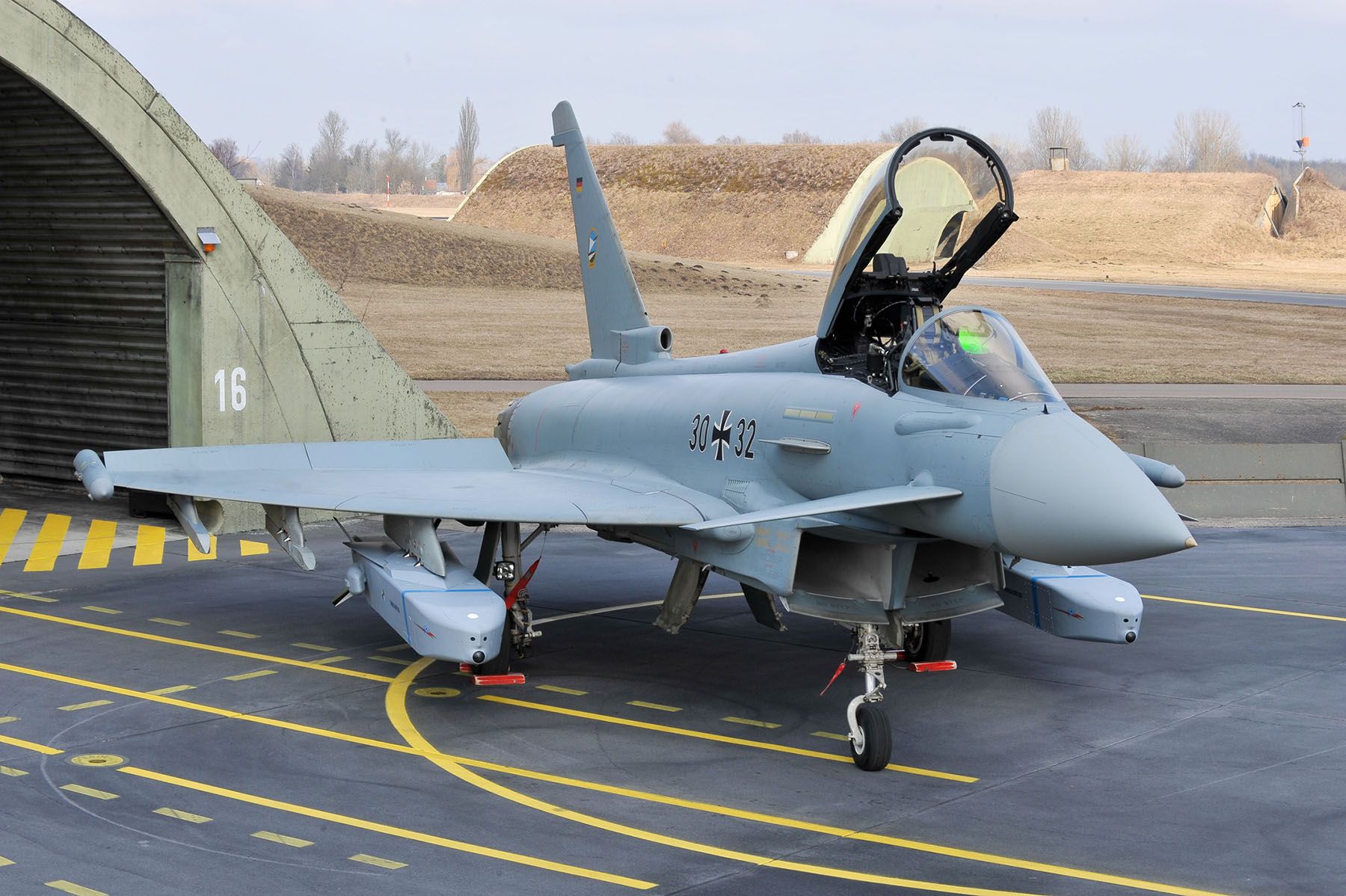
Tranche 5
In March 2023, Airbus was keen to secure a follow-up order to assure continuation of Eurofighter production following completion of Tranche 4, foreseen to take place in 2030.
Early 2024, the first mention for a possible Tranche 5 order is noted. This version will need a redesign of computer hardware, a modernised cockpit layout, expansion of the weapons portfolio and obviously new software. This development should lead Eurofighter into the mid-century.
During the ILA Berlin Air Show 2024, German Chancellor Olaf Scholz announced that his country would order 20 more Eurofighters before the end of 2025. Thereafter it remained a bit quiet. A study for the Eurofighter LTE (Long Term Evolution) was approved by the German Parliament on 18 December 2024, but it would not be before 8 October 2025 that the Haushaltsausschuss (budget committee) of the German Bundestag approved the order announced more than year earlier.
The Tranche 5 order is worth €3.75 billion and includes new ECRS radars. In addition, new tactical flight simulators have been acquired for realistic synthetic training. Deliveries are planned between 2031 until 2034.
As it looks now, the Tranche 5 aircraft will all be delivered with the future P4E upgrade package installed, specifically including the new Electronic Warfare features. This would mean that the these aircraft will be operated by the Taktisches Luftwaffengeschwader 51 at Schleswig-Jagel along with 15 similarly adapted aircraft built in Tranche 4. These will replace the Tornado ECS in that role.
So eventually, 201 Eurofighters have been bought (212 different airframes if one adds the eleven swapped in some way regarding the Austrian deal). Will Tranche 5 be the final Eurofighter procurement for the Luftwaffe? With the Future Combat Air System on the distant horizon, this seems likely. The current geopolitical might speeds things up, but I have the impression that we will see Eurofighters in the air for several decades. As a fan of its design, I won’t complain. ■